
Beyond: The SuperComputing Conference (for Astronomers)
One Weird Trick To Leave Academia Forever And Fight Your Way Into The Tech Job Market

One Weird Trick To Leave Academia Forever And Fight Your Way Into The Tech Job Market
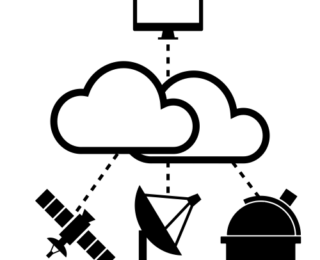
You’ve used the cloud, but have you thought about using it for astronomy? This panel from #AAS241 tells us how!
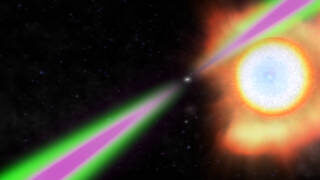
A redback pulsar slowly accreting its companion has been confirmed, by the people, through gamma-ray pulsations for the first time.
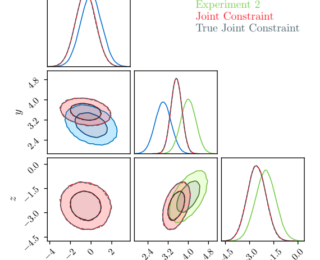
Constraining physical parameters in a cosmological survey is often computationally expensive, especially when considering more than one survey at a time. The authors of this paper offer a simple method to reconstruct parameter distributions in a fraction of the time needed for most high-performance computers.
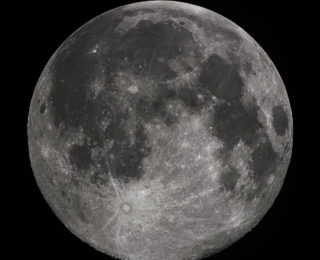
Finding craters is a pesky problem – so let’s outsource it to machine learning!
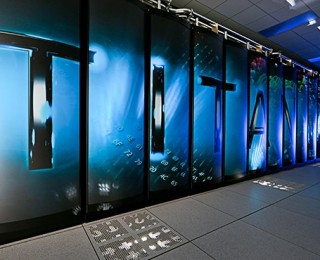
Computational physicists are already looking to the next milestone on the horizon: exascale computing, or supercomputers whose performance peaks in the exaflop range. But we need to get a lot better at parallelization before we can successfully compute at the exascale level.