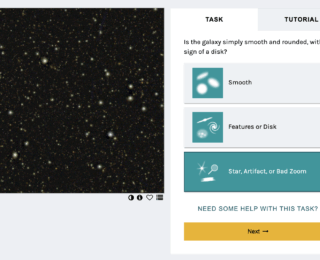
Cosmic Dawn at the Galaxy Zoo
Citizen scientists can make important contributions to the study of galaxies (like the discovery of new gravitational lenses!), and their work can also be used to train better machine learning models.

Citizen scientists can make important contributions to the study of galaxies (like the discovery of new gravitational lenses!), and their work can also be used to train better machine learning models.

Every wondered if you can contribute to scientific research? Today’s article explores one way: citizen science!
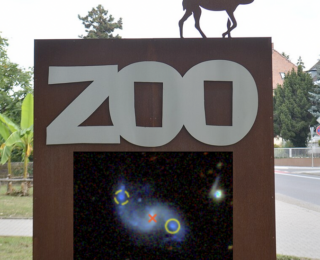
In today’s paper, citizen scientists helped create the first major catalog of nearby clumpy galaxies as part of the Galaxy Zoo: Clump Scout project.
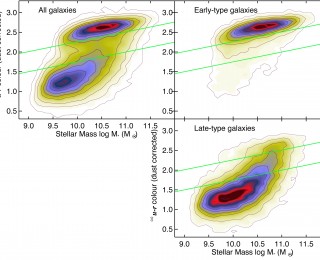
Large surveys of galaxies have revealed a bimodal color distribution: most galaxies tend to be red or blue, leaving a gap in the middle known as the green valley. The authors of this paper use morphologies provided by the Galaxy Zoo project to show that not all galaxies take the same quick path through the green valley.
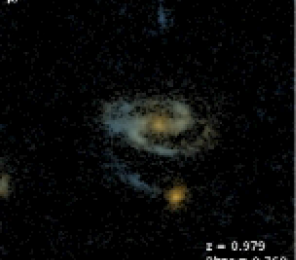
Astronomers have long wished to probe the number of galaxies containing bar structures to ever increasing redshifts. This paper discusses the first results from the Galaxy Zoo Hubble classifications of galaxies out to redshifts of z = 1, in order to study how the fraction of galaxies containing a bar has changed over a cosmic time that has previously not been explored.
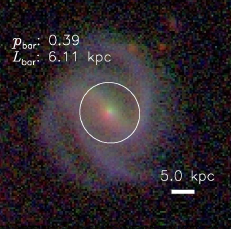
Galactic bars have long been associated with many processes affecting galactic evolution. This paper studies how bars affect the star formation rate, mass and structure of a large sample of morphologically classified galaxies.