• RSS
  • Submit a Guest Post
  • Undergraduates: Submit your Research!
  • Suggest a Paper Topic!
astrobites
  • About
    • About Astrobites
    • Meet the Authors
    • Statement of Inclusivity
    • Copyright & Permissions
  • Latest Research
    • Daily Paper Summaries
    • Classics
    • Undergrad Research
    • Physical Review Coverage
  • Beyond astro-ph
    • Beyond astro-ph Library
    • Interviews
    • Career Navigation
    • Personal Experiences
    • Current Events
    • Teaching with Astrobites
  • Guides
    • EM Spectrum
    • Galaxies & AGNs
    • Spectroscopy and Spectral Lines
    • Adaptive Optics
    • Gravitational Waves
    • Transient Astronomy
    • Astrophysical Software
    • Graduate School
    • Writing a personal statement for grad apps
    • First Observing Run
    • …More Guides!
Select Page
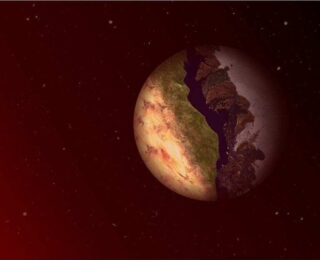
Super-Earth, Super-Tectonics?

Super-Earth, Super-Tectonics?

by Diana Solano-Oropeza | Oct 1, 2025 | Daily Paper Summaries

Turns out there’s more than one way to “plate” a planet!

How a Moon-sized Deep Impact affected early Life on Earth

How a Moon-sized Deep Impact affected early Life on Earth

by Roel Lefever | Apr 19, 2022 | Classics, Daily Paper Summaries

Do you you want to know how it was like on the early Earth? I can say you this: it probably wasn’t pretty.
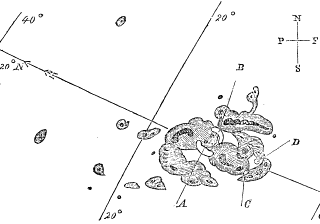
A Different Kind of World-Changing Disaster: Another Carrington Event

A Different Kind of World-Changing Disaster: Another Carrington Event

by Bryanne McDonough | May 8, 2020 | Daily Paper Summaries

A historic geomagnetic storm and the consequences of a similar event now.
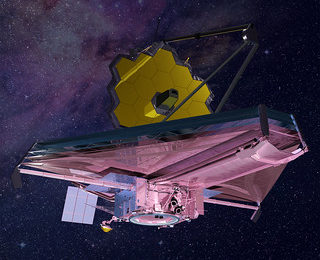
BEYOND: Space Missions To Look Forward To In the 2020s

BEYOND: Space Missions To Look Forward To In the 2020s

by Bryanne McDonough | Dec 27, 2019 | Current Events, Guides

A brief summary of some of the major space missions that are planning to launch in the 2020s.
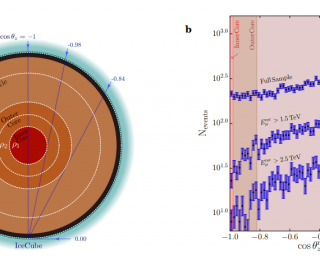
Studying the Earth’s Interior with (atmospheric) Neutrinos

Studying the Earth’s Interior with (atmospheric) Neutrinos

by Aaron Tohuvavohu | Sep 20, 2018 | Daily Paper Summaries

Astrophysicists and their experiments normally look up, not down. IceCube is an exception. Here the density profile of the Earth is measured using neutrinos.
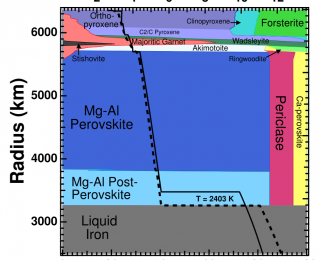
Can we constrain planetary mineralogy of the closest stars?

Can we constrain planetary mineralogy of the closest stars?

by Leonardo dos Santos | Dec 23, 2017 | Daily Paper Summaries

We can precisely measure chemical abundances for stars. This offers an intriguing possibility that we may, in the near future, start using these measurements to know more about the insides of rocky planets orbiting them.

« Older Entries

Loading

Follow our socials

  • Bluesky
  • Facebook
  • Instagram
  • RSS Feed

More Posts About

AAS AGN astronomy astrophysics binary stars black holes cosmology dark matter dwarf galaxies exoplanets galaxies galaxy evolution gravitational waves habitability JWST Kepler Milky Way observations planetary science planet formation protoplanetary disks radio astronomy simulations solar system spectroscopy star formation stars stellar evolution supernovae theory

Posts by Category

  • Accessibility
  • Applications
  • Beyond
  • Book Reviews
  • Career Navigation
  • Classics
  • Climate Change
  • Course Assignments
  • Crossposts
  • Current Events
  • Daily Paper Summaries
  • Game Reviews
  • Guides
  • Historical Astronomy
  • Instrumentation
  • Interviews
  • Outreach
  • Personal Experiences
  • PRJ
  • Quick Notes
  • Satellites
  • Teaching
  • Undergraduate Research

More Astronomy

  • AAS
  • AAS Nova
  • astro-ph
  • AstroBetter
  • APOD

Read Astrobites in Other Languages

  • Astrobitos (Spanish)
  • Astropontos (Portuguese)
  • staryab (Farsi)

Listen to Astrobites

  • astro[sound]bites

Discover More Incredible Science

  • ScienceBites Network
  • RSS

© 2026 Astrobites | All Rights Reserved | Supported by AAS | Designed by Elegant Themes | Powered by WordPress