• RSS
  • Submit a Guest Post
  • Undergraduates: Submit your Research!
  • Suggest a Paper Topic!
astrobites
  • About
    • About Astrobites
    • Meet the Authors
    • Statement of Inclusivity
    • Copyright & Permissions
  • Latest Research
    • Daily Paper Summaries
    • Classics
    • Undergrad Research
    • Physical Review Coverage
  • Beyond astro-ph
    • Beyond astro-ph Library
    • Interviews
    • Career Navigation
    • Personal Experiences
    • Current Events
    • Teaching with Astrobites
  • Guides
    • EM Spectrum
    • Galaxies & AGNs
    • Spectroscopy and Spectral Lines
    • Adaptive Optics
    • Gravitational Waves
    • Transient Astronomy
    • Astrophysical Software
    • Graduate School
    • Writing a personal statement for grad apps
    • First Observing Run
    • …More Guides!
Select Page
Let’s Be Real: a call for physically realistic assumptions

Let’s Be Real: a call for physically realistic assumptions

by Janette Suherli | Oct 26, 2023 | Daily Paper Summaries

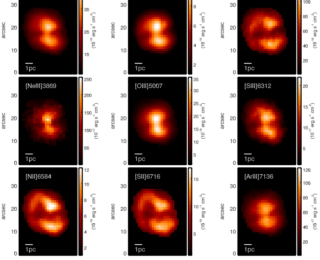
Many assumptions are used as input for photoionization codes that model HII regions. Today’s paper explores how these assumptions are oversimplified and emphasizes the need for more physically realistic ones.
UR: The Mystery of Orphan H II Regions: Where Are the Ionising Star Clusters?

UR: The Mystery of Orphan H II Regions: Where Are the Ionising Star Clusters?

by Guest | Oct 28, 2021 | Undergraduate Research

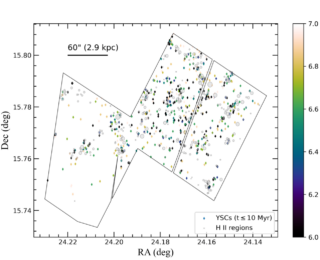
In the latest of our #UndergradResearch series, explore how Jia Wei Teh examines young star clusters and tries to match them to HII regions!
A Disk And A Jet Walk Into A Star

A Disk And A Jet Walk Into A Star

by Ashley Piccone | Aug 11, 2021 | Daily Paper Summaries

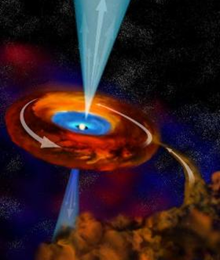
The startender asks, “How are the three of you working together?!”
UR: Detecting HII Regions in the Outer Scutum-Centaurus Arm

UR: Detecting HII Regions in the Outer Scutum-Centaurus Arm

by Guest | Jun 6, 2021 | Undergraduate Research

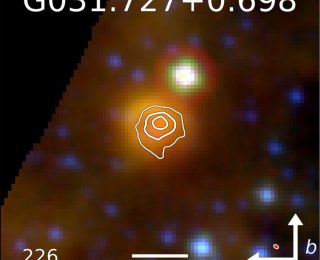
In the latest of our #UndergradResearch series, discover Alexander Johnson’s research on detecting HII regions in the Milky Way’s most distant spiral arm.
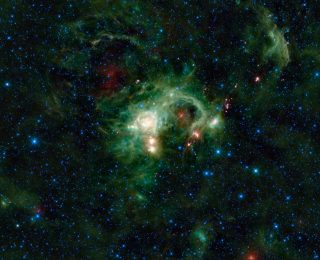
Inflating HII Regions Cause Star Formation to Pop!

Inflating HII Regions Cause Star Formation to Pop!

by Ashley Piccone | May 5, 2021 | Daily Paper Summaries

When HII regions expand, they look like an inflating balloon. But what happens after that balloon pops?
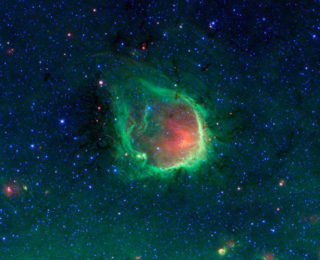
Are HII regions and star formation fila-meant to be together?

Are HII regions and star formation fila-meant to be together?

by Ashley Piccone | May 4, 2020 | Daily Paper Summaries

This hot and massive star is blowing a bubble of ionized Hydrogen, which forms spider web-like filaments of material that may be the catalyst for forming other massive stars.

« Older Entries

Loading

Follow our socials

  • Bluesky
  • Facebook
  • Instagram
  • RSS Feed

More Posts About

AAS AGN astronomy astrophysics binary stars black holes cosmology dark matter dwarf galaxies exoplanets galaxies galaxy evolution gravitational waves habitability JWST Kepler Milky Way observations planetary science planet formation protoplanetary disks radio astronomy simulations solar system spectroscopy star formation stars stellar evolution supernovae theory

Posts by Category

  • Accessibility
  • Applications
  • Beyond
  • Book Reviews
  • Career Navigation
  • Classics
  • Climate Change
  • Course Assignments
  • Crossposts
  • Current Events
  • Daily Paper Summaries
  • Game Reviews
  • Guides
  • Historical Astronomy
  • Instrumentation
  • Interviews
  • Outreach
  • Personal Experiences
  • PRJ
  • Quick Notes
  • Satellites
  • Teaching
  • Undergraduate Research

More Astronomy

  • AAS
  • AAS Nova
  • astro-ph
  • AstroBetter
  • APOD

Read Astrobites in Other Languages

  • Astrobitos (Spanish)
  • Astropontos (Portuguese)
  • staryab (Farsi)

Listen to Astrobites

  • astro[sound]bites

Discover More Incredible Science

  • ScienceBites Network
  • RSS

© 2026 Astrobites | All Rights Reserved | Supported by AAS | Designed by Elegant Themes | Powered by WordPress