• RSS
  • Submit a Guest Post
  • Undergraduates: Submit your Research!
  • Suggest a Paper Topic!
astrobites
  • About
    • About Astrobites
    • Meet the Authors
    • Statement of Inclusivity
    • Copyright & Permissions
  • Latest Research
    • Daily Paper Summaries
    • Classics
    • Undergrad Research
    • Physical Review Coverage
  • Beyond astro-ph
    • Beyond astro-ph Library
    • Interviews
    • Career Navigation
    • Personal Experiences
    • Current Events
    • Teaching with Astrobites
  • Guides
    • EM Spectrum
    • Galaxies & AGNs
    • Spectroscopy and Spectral Lines
    • Adaptive Optics
    • Gravitational Waves
    • Transient Astronomy
    • Astrophysical Software
    • Graduate School
    • Writing a personal statement for grad apps
    • First Observing Run
    • …More Guides!
Select Page
Can black holes light up the high redshift Universe?

Can black holes light up the high redshift Universe?

by Shalini Kurinchi-Vendhan | Oct 25, 2025 | Daily Paper Summaries, PRJ

…and as a follow up, could they be a candidate for dark matter?

In the stellar kitchen: how mixing radiation and magnetic fields leads to smaller Population III stars

In the stellar kitchen: how mixing radiation and magnetic fields leads to smaller Population III stars

by Caroline von Raesfeld | Jan 29, 2025 | Daily Paper Summaries

Today’s bite considers what ingredients you need when simulating the births of the earliest stars in the universe.
The search for the first stars to light up the Universe

The search for the first stars to light up the Universe

by Lucie Rowland | May 28, 2024 | Daily Paper Summaries

One of JWST’s aims is to find the very first stars in the Universe – but is it up to the task?
Twinkle, twinkle, highest redshift star; how we wonder what you are!

Twinkle, twinkle, highest redshift star; how we wonder what you are!

by Pratik Gandhi | Apr 7, 2022 | Daily Paper Summaries

What do mythology, Tolkien, and astrophysics have in common?
Bright Line that Goes a Long Way

Bright Line that Goes a Long Way

by Benny Tsang | Oct 13, 2016 | Daily Paper Summaries

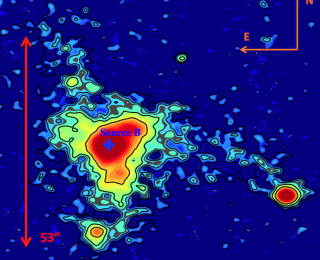
The biggest and the brightest Lyα nebula is discovered! What can we learn from this giant?
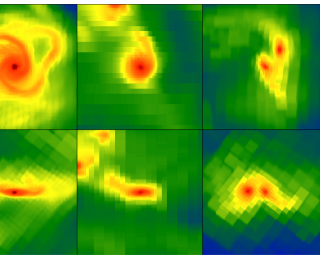
What did the first collections of stars look like?

What did the first collections of stars look like?

by Christopher Lovell | Aug 18, 2016 | Daily Paper Summaries

Simulations of the first groups of stars display a variety of shapes and sizes, and may provide clues as to where their ancestors are hiding today

« Older Entries

Loading

Follow our socials

  • Bluesky
  • Facebook
  • Instagram
  • RSS Feed

More Posts About

AAS AGN astronomy astrophysics binary stars black holes cosmology dark matter dwarf galaxies exoplanets galaxies galaxy evolution gravitational waves habitability JWST Kepler Milky Way observations planetary science planet formation protoplanetary disks radio astronomy simulations solar system spectroscopy star formation stars stellar evolution supernovae theory

Posts by Category

  • Accessibility
  • Applications
  • Beyond
  • Book Reviews
  • Career Navigation
  • Classics
  • Climate Change
  • Course Assignments
  • Crossposts
  • Current Events
  • Daily Paper Summaries
  • Game Reviews
  • Guides
  • Historical Astronomy
  • Instrumentation
  • Interviews
  • Outreach
  • Personal Experiences
  • PRJ
  • Quick Notes
  • Satellites
  • Teaching
  • Undergraduate Research

More Astronomy

  • AAS
  • AAS Nova
  • astro-ph
  • AstroBetter
  • APOD

Read Astrobites in Other Languages

  • Astrobitos (Spanish)
  • Astropontos (Portuguese)
  • staryab (Farsi)

Listen to Astrobites

  • astro[sound]bites

Discover More Incredible Science

  • ScienceBites Network
  • RSS

© 2026 Astrobites | All Rights Reserved | Supported by AAS | Designed by Elegant Themes | Powered by WordPress