• RSS
  • Submit a Guest Post
  • Undergraduates: Submit your Research!
  • Suggest a Paper Topic!
astrobites
  • About
    • About Astrobites
    • Meet the Authors
    • Statement of Inclusivity
    • Copyright & Permissions
  • Latest Research
    • Daily Paper Summaries
    • Classics
    • Undergrad Research
    • Physical Review Coverage
  • Beyond astro-ph
    • Beyond astro-ph Library
    • Interviews
    • Career Navigation
    • Personal Experiences
    • Current Events
    • Teaching with Astrobites
  • Guides
    • EM Spectrum
    • Galaxies & AGNs
    • Spectroscopy and Spectral Lines
    • Adaptive Optics
    • Gravitational Waves
    • Transient Astronomy
    • Astrophysical Software
    • Graduate School
    • Writing a personal statement for grad apps
    • First Observing Run
    • …More Guides!
Select Page
A Vampire’s Sandwich Filled With Gas And Dust

A Vampire’s Sandwich Filled With Gas And Dust

by Maria Vincent | Mar 12, 2024 | Daily Paper Summaries

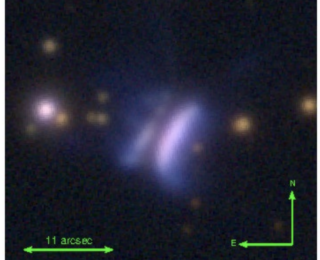
This bite reports a serendipitous discovery of what is possibly the largest protoplanetary disk, which has an interesting shape.

Forecasting the obscured first few billion years

Forecasting the obscured first few billion years

by Olivia Cooper | Feb 22, 2022 | Daily Paper Summaries

What will JWST reveal about the obscured early Universe? Today’s authors process simulations to find out
The Formation of Massive Stars

The Formation of Massive Stars

by Mitchell Cavanagh | Jul 6, 2020 | Daily Paper Summaries

New simulations provide insights on the processes behind the formation of massive stars
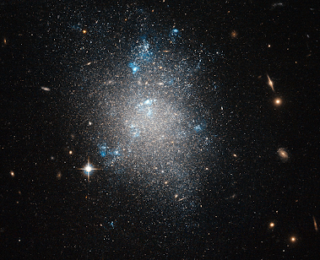
Dwarf Galaxies at the cutting EDGE of galaxy formation

Dwarf Galaxies at the cutting EDGE of galaxy formation

by Guest | Jul 3, 2020 | Course Assignments, Daily Paper Summaries

What can we use dwarf galaxies for?

Blurred Lines: degeneracies in modeling exoplanet atmospheres

Blurred Lines: degeneracies in modeling exoplanet atmospheres

by Vatsal Panwar | May 23, 2018 | Daily Paper Summaries

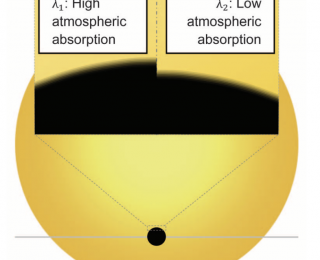
Scrutinizing a popular method of characterizing exoplanet atmospheres reveals an inherent degeneracy that may only be overcome in special cases.
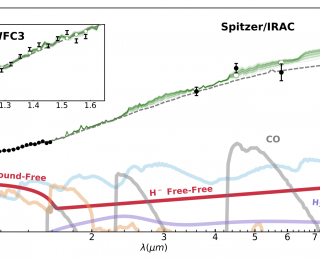
An Occam’s razor for very-hot hot Jupiters

An Occam’s razor for very-hot hot Jupiters

by Vatsal Panwar | Mar 6, 2018 | Daily Paper Summaries

Cues from stellar atmospheric chemistry can help in explaining the observations of very-hot gas giant atmospheres.

« Older Entries

Loading

Follow our socials

  • Bluesky
  • Facebook
  • Instagram
  • RSS Feed

More Posts About

AAS AGN astronomy astrophysics binary stars black holes cosmology dark matter dwarf galaxies exoplanets galaxies galaxy evolution gravitational waves habitability JWST Kepler Milky Way observations planetary science planet formation protoplanetary disks radio astronomy simulations solar system spectroscopy star formation stars stellar evolution supernovae theory

Posts by Category

  • Accessibility
  • Applications
  • Beyond
  • Book Reviews
  • Career Navigation
  • Classics
  • Climate Change
  • Course Assignments
  • Crossposts
  • Current Events
  • Daily Paper Summaries
  • Game Reviews
  • Guides
  • Historical Astronomy
  • Instrumentation
  • Interviews
  • Outreach
  • Personal Experiences
  • PRJ
  • Quick Notes
  • Satellites
  • Teaching
  • Undergraduate Research

More Astronomy

  • AAS
  • AAS Nova
  • astro-ph
  • AstroBetter
  • APOD

Read Astrobites in Other Languages

  • Astrobitos (Spanish)
  • Astropontos (Portuguese)
  • staryab (Farsi)

Listen to Astrobites

  • astro[sound]bites

Discover More Incredible Science

  • ScienceBites Network
  • RSS

© 2026 Astrobites | All Rights Reserved | Supported by AAS | Designed by Elegant Themes | Powered by WordPress