• RSS
  • Submit a Guest Post
  • Undergraduates: Submit your Research!
  • Suggest a Paper Topic!
astrobites
  • About
    • About Astrobites
    • Meet the Authors
    • Statement of Inclusivity
    • Copyright & Permissions
  • Latest Research
    • Daily Paper Summaries
    • Classics
    • Undergrad Research
    • Physical Review Coverage
  • Beyond astro-ph
    • Beyond astro-ph Library
    • Interviews
    • Career Navigation
    • Personal Experiences
    • Current Events
    • Teaching with Astrobites
  • Guides
    • EM Spectrum
    • Galaxies & AGNs
    • Spectroscopy and Spectral Lines
    • Adaptive Optics
    • Gravitational Waves
    • Transient Astronomy
    • Astrophysical Software
    • Graduate School
    • Writing a personal statement for grad apps
    • First Observing Run
    • …More Guides!
Select Page
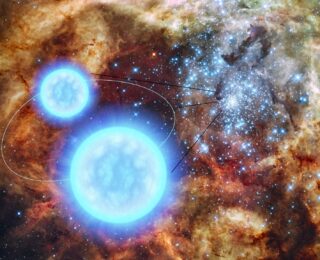
It’s not you, it’s me. I just need several parsec of space.

It’s not you, it’s me. I just need several parsec of space.

by Ryan White | Dec 9, 2025 | Daily Paper Summaries

What does a stellar breakup look like? So dramatic that the stars can’t wait to get away from each other! Today’s authors use physics to search for the one who got away.

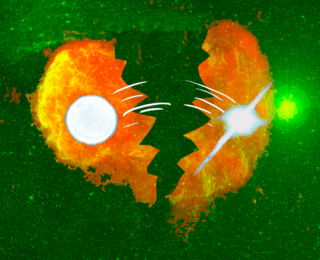
The suspects may be fleeing the scene of the crime, but our most stellar detectives are on the case!

The suspects may be fleeing the scene of the crime, but our most stellar detectives are on the case!

by Kasper Zoellner | Jul 12, 2025 | Daily Paper Summaries, PRJ

What kind of event is violent enough to fling around stars that are hundreds of times more massive than our Sun? Find out today!
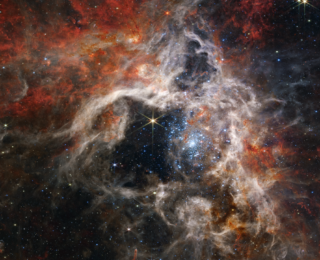
Whizzing and Whirling Stars in the Tarantula’s Web

Whizzing and Whirling Stars in the Tarantula’s Web

by Katya Gozman | Dec 15, 2022 | Daily Paper Summaries

Some stars are speedier than their siblings: read on to learn about the different populations of runaway stars in the Tarantula Nebula!

Stars that exploded just a little bit

by Sanjana Curtis | Mar 6, 2019 | Daily Paper Summaries

Partly burnt stars are zipping through space, carrying a strange mix of elements. What can we learn by observing them?
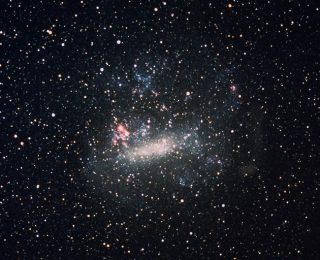
Run away, star

Run away, star

by Philipp Plewa | May 4, 2017 | Daily Paper Summaries

Could the Milky Way’s hypervelocity stars originate from the LMC?
A Novel Approach of Determining the Mass-loss Rates of Massive Stars

A Novel Approach of Determining the Mass-loss Rates of Massive Stars

by Anna Rosen | Sep 12, 2012 | Daily Paper Summaries

These authors describe a novel method to determine the mass-loss rates of massive runaway stars.

« Older Entries

Loading

Follow our socials

  • Bluesky
  • Facebook
  • Instagram
  • RSS Feed

More Posts About

AAS AGN astronomy astrophysics binary stars black holes cosmology dark matter dwarf galaxies exoplanets galaxies galaxy evolution gravitational waves habitability JWST Kepler Milky Way observations planetary science planet formation protoplanetary disks radio astronomy simulations solar system spectroscopy star formation stars stellar evolution supernovae theory

Posts by Category

  • Accessibility
  • Applications
  • Beyond
  • Book Reviews
  • Career Navigation
  • Classics
  • Climate Change
  • Course Assignments
  • Crossposts
  • Current Events
  • Daily Paper Summaries
  • Game Reviews
  • Guides
  • Historical Astronomy
  • Instrumentation
  • Interviews
  • Outreach
  • Personal Experiences
  • PRJ
  • Quick Notes
  • Satellites
  • Teaching
  • Undergraduate Research

More Astronomy

  • AAS
  • AAS Nova
  • astro-ph
  • AstroBetter
  • APOD

Read Astrobites in Other Languages

  • Astrobitos (Spanish)
  • Astropontos (Portuguese)
  • staryab (Farsi)

Listen to Astrobites

  • astro[sound]bites

Discover More Incredible Science

  • ScienceBites Network
  • RSS

© 2026 Astrobites | All Rights Reserved | Supported by AAS | Designed by Elegant Themes | Powered by WordPress