
by Sandy Chiu | Jan 15, 2026 | Classics, Daily Paper Summaries
Massive galaxies all seem to end up quiet and quenched—but the physics inside them can look wildly different. This story explores how AGN-driven cosmic rays reshape galaxies from the inside out, changing local conditions without altering their ultimate fate.
by Will Golay | Dec 22, 2025 | Daily Paper Summaries
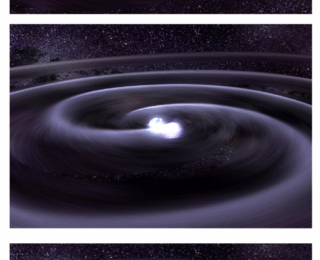
Half of all stars are in binaries. Stars that end their lives as the most massive white dwarfs often also have another distant star orbiting an inner binary. Could these tertiary stars play a role in merging the inner binaries into remnant objects that emit fast radio bursts?
by Sandy Chiu | Dec 13, 2025 | Classics, Daily Paper Summaries, PRJ
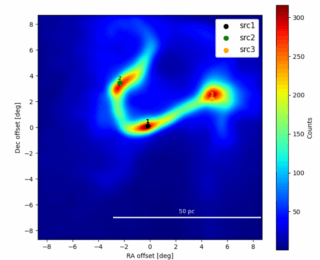
Cosmic rays don’t always reveal their origins honestly—magnetic fields can bend their paths and create “mirage halos” that look like real gamma-ray sources. New simulations show how a single pulsar can masquerade as three, reshaping how we interpret TeV observations.
by Kylee Carden | Nov 12, 2025 | Daily Paper Summaries, PRJ
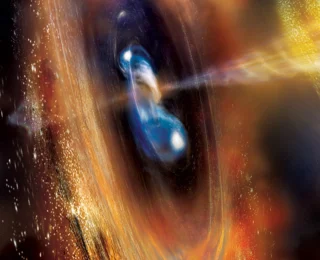
Neutron stars are some of the densest, most exotic objects in the universe. Today’s paper explores how simulating novel neutrino physics affects the outcome of neutron star mergers.
by Kylee Carden | Oct 2, 2025 | Daily Paper Summaries
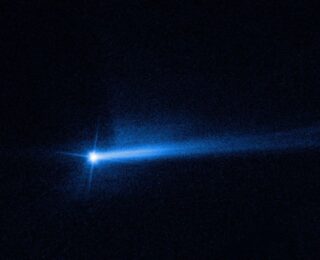
In 2022, NASA’s DART spacecraft crashed itself into an asteroid in a binary system. Today’s paper investigates the unexpected evolution of the binary’s orbit after the collision.
by Kylee Carden | Sep 25, 2025 | Daily Paper Summaries
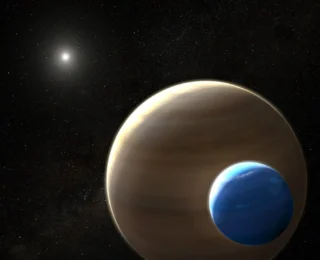
Though moons are ubiquitous in our Solar System, we have not yet found one elsewhere (an exomoon). Today’s paper investigates whether we could find moons by precisely tracking the positions of a star and planet.
