Meet the AAS Keynote Speakers: Prof. John Peacock
We interview the RAS Gold Medal Lecturer for AAS244, Prof. John Peacock!

We interview the RAS Gold Medal Lecturer for AAS244, Prof. John Peacock!
Curious about how we convert 0’s and 1’s into images? Then go listen to Dr. Robert Lupton’s talk at #AAS240!
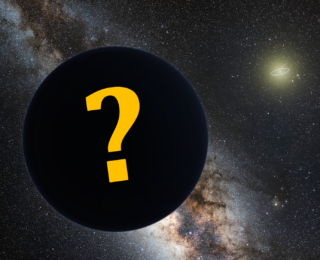
Planet 9. Everyone’s favorite yet to be discovered planet; famously predicted to exist due to the aligned orbits of TNOs. Today’s paper explores the question, is a Planet 9 really the most likely scenario to explain these orbits?
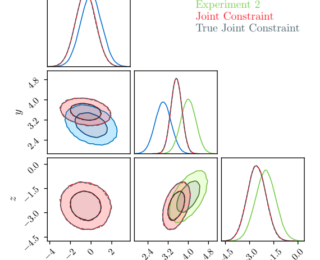
Constraining physical parameters in a cosmological survey is often computationally expensive, especially when considering more than one survey at a time. The authors of this paper offer a simple method to reconstruct parameter distributions in a fraction of the time needed for most high-performance computers.
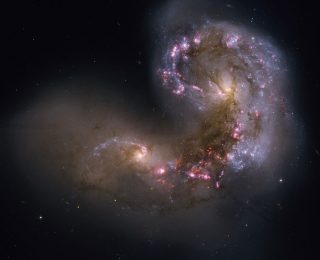
The longstanding role of galaxy mergers as drivers of star-formation is brought into question
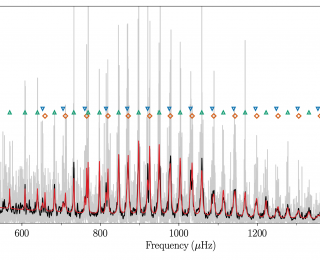
Today’s authors take a multi-faceted approach to characterising a benchmark subgiant star using asteroseismology, interferometry, and spectroscopy.