• RSS
  • Submit a Guest Post
  • Undergraduates: Submit your Research!
  • Suggest a Paper Topic!
astrobites
  • About
    • About Astrobites
    • Meet the Authors
    • Statement of Inclusivity
    • Copyright & Permissions
  • Latest Research
    • Daily Paper Summaries
    • Classics
    • Undergrad Research
    • Physical Review Coverage
  • Beyond astro-ph
    • Beyond astro-ph Library
    • Interviews
    • Career Navigation
    • Personal Experiences
    • Current Events
    • Teaching with Astrobites
  • Guides
    • EM Spectrum
    • Galaxies & AGNs
    • Spectroscopy and Spectral Lines
    • Adaptive Optics
    • Gravitational Waves
    • Transient Astronomy
    • Astrophysical Software
    • Graduate School
    • Writing a personal statement for grad apps
    • First Observing Run
    • …More Guides!
Select Page
Disk Detective: The Newest Astronomy Citizen Science Project

Disk Detective: The Newest Astronomy Citizen Science Project

by Erika Nesvold | Feb 2, 2014 | Current Events

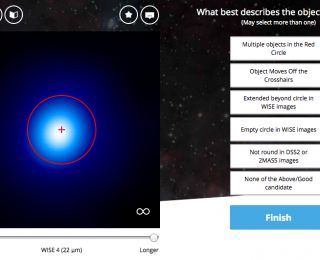
Finding circumstellar disks in the Wide-Field Infrared Survey Explorer data is a tough job, but fortunately our brains are even better suited to the task than computers! You can help by lending your pattern-recognition skills to Disk Detective, the Zooniverse’s newest citizen science project.
First GASPs of Star Formation in Taurus

First GASPs of Star Formation in Taurus

by Adele Plunkett | Jul 20, 2012 | Daily Paper Summaries

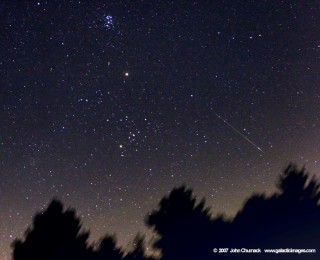
The well-known constellation Taurus is home to many young stars, and the details of star formation are explained by observing far-infrared radiation from several of these objects with the Herschel space observatory.
How to tell that a young stellar object is really young

How to tell that a young stellar object is really young

by Adele Plunkett | Aug 31, 2011 | Daily Paper Summaries

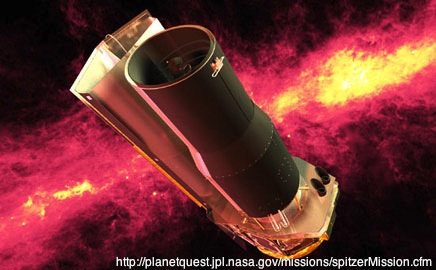
Many aspects of the star forming process, especially the process to form massive stars (greater than 8 solar masses), remain unknown. This paper distinguishes between two stages of star formation by fitting models to observations of several young stellar objects in the giant molecular cloud G333.

Loading

Follow our socials

  • Bluesky
  • Facebook
  • Instagram
  • RSS Feed

More Posts About

AAS AGN astronomy astrophysics binary stars black holes cosmology dark matter dwarf galaxies exoplanets galaxies galaxy evolution gravitational waves habitability JWST Kepler Milky Way observations planetary science planet formation protoplanetary disks radio astronomy simulations solar system spectroscopy star formation stars stellar evolution supernovae theory

Posts by Category

  • Accessibility
  • Applications
  • Beyond
  • Book Reviews
  • Career Navigation
  • Classics
  • Climate Change
  • Course Assignments
  • Crossposts
  • Current Events
  • Daily Paper Summaries
  • Game Reviews
  • Guides
  • Historical Astronomy
  • Instrumentation
  • Interviews
  • Outreach
  • Personal Experiences
  • PRJ
  • Quick Notes
  • Satellites
  • Teaching
  • Undergraduate Research

More Astronomy

  • AAS
  • AAS Nova
  • astro-ph
  • AstroBetter
  • APOD

Read Astrobites in Other Languages

  • Astrobitos (Spanish)
  • Astropontos (Portuguese)
  • staryab (Farsi)

Listen to Astrobites

  • astro[sound]bites

Discover More Incredible Science

  • ScienceBites Network
  • RSS

© 2026 Astrobites | All Rights Reserved | Supported by AAS | Designed by Elegant Themes | Powered by WordPress