• RSS
  • Submit a Guest Post
  • Undergraduates: Submit your Research!
  • Suggest a Paper Topic!
astrobites
  • About
    • About Astrobites
    • Meet the Authors
    • Statement of Inclusivity
    • Copyright & Permissions
  • Latest Research
    • Daily Paper Summaries
    • Classics
    • Undergrad Research
    • Physical Review Coverage
  • Beyond astro-ph
    • Beyond astro-ph Library
    • Interviews
    • Career Navigation
    • Personal Experiences
    • Current Events
    • Teaching with Astrobites
  • Guides
    • EM Spectrum
    • Galaxies & AGNs
    • Spectroscopy and Spectral Lines
    • Adaptive Optics
    • Gravitational Waves
    • Transient Astronomy
    • Astrophysical Software
    • Graduate School
    • Writing a personal statement for grad apps
    • First Observing Run
    • …More Guides!
Select Page
The Case of the Missing Giants

The Case of the Missing Giants

by Jesse Feddersen | Feb 16, 2016 | Daily Paper Summaries

Red giant stars are bright enough to see at the center of our galaxy, but they are missing. A new study puts stars in a wind tunnel to explore a possible way to dim the lights.

The tempestuous adolescence of circumstellar disks

The tempestuous adolescence of circumstellar disks

by Tim Lichtenberg | Feb 15, 2016 | Daily Paper Summaries

Massive gas inflow can trigger disks around young stars to become gravitationally unstable, resulting in vigorous accretion onto the star.
After Super-Earth (Formation)

After Super-Earth (Formation)

by Michael Hammer | Feb 4, 2016 | Daily Paper Summaries

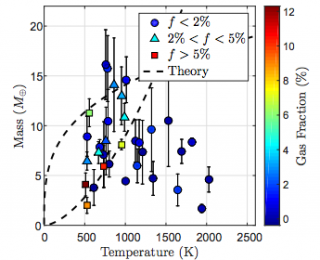
Will Smith and his son Kitai are back in this highly anticipated, totally unexpected sequel and this time, they’ve crash landed on a Super-Earth. Surviving won’t be easy, but it might be even harder for the planet’s atmosphere.
The Dwarf that Devours Planets

The Dwarf that Devours Planets

by Ingrid Pelisoli | Jan 26, 2016 | Daily Paper Summaries

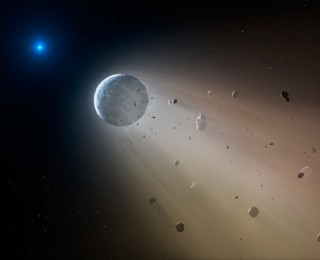
Astronomers may have finally observed the event that explains polluted white dwarfs and their debris disks.
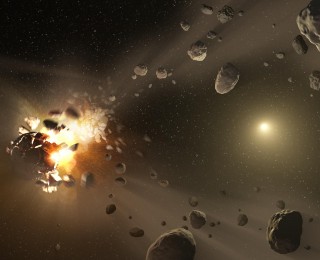
Ripping Apart Asteroids to Account for Earth’s Strangeness

Ripping Apart Asteroids to Account for Earth’s Strangeness

by Tim Lichtenberg | Nov 2, 2015 | Daily Paper Summaries

Earth’s composition seemingly does not fit into planet formation theory. Ripping apart its building blocks by collisions during accretion might sound violent, but can be a way to go.
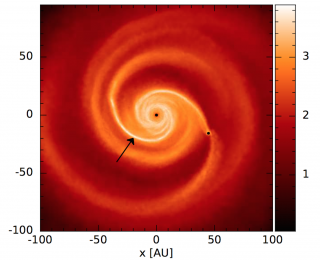
Triggered fragmentation in self-gravitating disks

Triggered fragmentation in self-gravitating disks

by Tim Lichtenberg | Sep 15, 2015 | Daily Paper Summaries

How to form clumps in the intermediate ranges of massive protoplanetary disks? Could these later be planets?

« Older Entries
Next Entries »

Loading

Follow our socials

  • Bluesky
  • Facebook
  • Instagram
  • RSS Feed

More Posts About

AAS AGN astronomy astrophysics binary stars black holes cosmology dark matter dwarf galaxies exoplanets galaxies galaxy evolution gravitational waves habitability JWST Kepler Milky Way observations planetary science planet formation protoplanetary disks radio astronomy simulations solar system spectroscopy star formation stars stellar evolution supernovae theory

Posts by Category

  • Accessibility
  • Applications
  • Beyond
  • Book Reviews
  • Career Navigation
  • Classics
  • Climate Change
  • Course Assignments
  • Crossposts
  • Current Events
  • Daily Paper Summaries
  • Game Reviews
  • Guides
  • Historical Astronomy
  • Instrumentation
  • Interviews
  • Outreach
  • Personal Experiences
  • PRJ
  • Quick Notes
  • Satellites
  • Teaching
  • Undergraduate Research

More Astronomy

  • AAS
  • AAS Nova
  • astro-ph
  • AstroBetter
  • APOD

Read Astrobites in Other Languages

  • Astrobitos (Spanish)
  • Astropontos (Portuguese)
  • staryab (Farsi)

Listen to Astrobites

  • astro[sound]bites

Discover More Incredible Science

  • ScienceBites Network
  • RSS

© 2026 Astrobites | All Rights Reserved | Supported by AAS | Designed by Elegant Themes | Powered by WordPress