by Michael Küffmeier | Sep 9, 2015 | Daily Paper Summaries
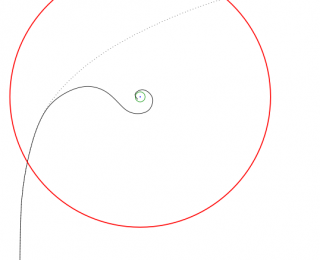
A model that needs fewest parameters to explain a scenario is favourable. The fact that mm-size dust grains (chondrules) are present in the entire solar system brings rise to the question, whether all bigger solid objects are a collection of chondrules.
by Tim Lichtenberg | Aug 18, 2015 | Daily Paper Summaries
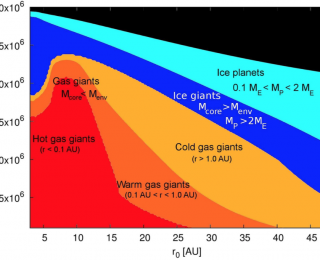
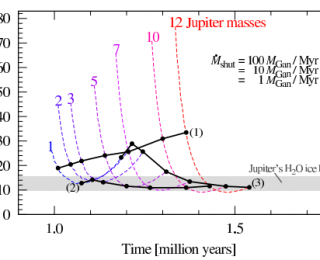
Planets are ubiquitous in the Milky Way. Therefore, building them must be straightforward, right? Not at all!
by Stacy Kim | May 7, 2015 | Daily Paper Summaries
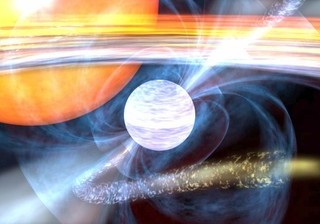
Pulsars, or rapidly-spinning neutron stars, have been observed to suddenly change in spin. Typically, the pulsars we’ve seen do this are isolated—what happens if they have a stellar companion?
by Ben Cook | Feb 20, 2015 | Daily Paper Summaries
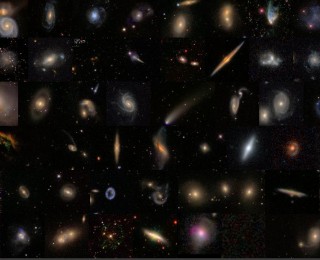
This paper reports the results of a cosmological simulation, and how smooth accretion and mergers affect three important aspects of galaxy formation: stellar mass growth, size increase, and morphology changes.
by Jaime Green | Nov 5, 2014 | Daily Paper Summaries
Those of us who love astrobiology get really worked up about the lack of Earth-sized exoplanets found at Earth-like distances from their stars. All we want, we who hope for lots of extraterrestrial life, is a bunch of Earth-like planets doing Earth-like things so we can feel better about the odds for lots of Earth-like life in the universe.
by Becky Smethurst | Jun 17, 2014 | Daily Paper Summaries
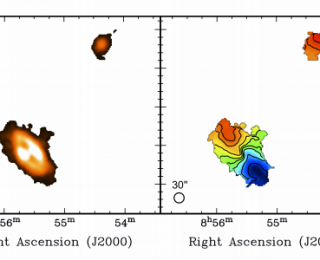
Once thought to be the main mechanism by which galaxies feed their star formation; the authors of this paper find that minor mergers cannot account for the observed star formation rates of galaxies.
