by Josh Fuchs | Mar 21, 2013 | Daily Paper Summaries
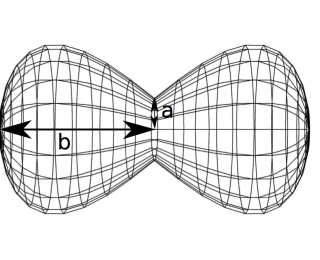
Novae are thermonuclear explosions that occur on the surface of a white dwarf following the accretion of matter from a nearby companion star. The authors seek to understand the geometry and velocity of the ejected material.
by Alice Olmstead | Feb 19, 2013 | Daily Paper Summaries
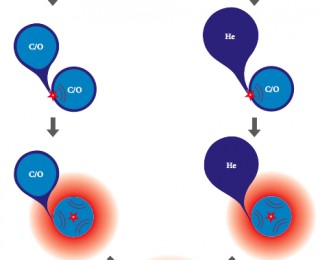
Pakmor et al. propose a new mechanism to make Type 1a supernova explosions from a pair of white dwarfs.
by Caroline Morley | Dec 13, 2012 | Daily Paper Summaries
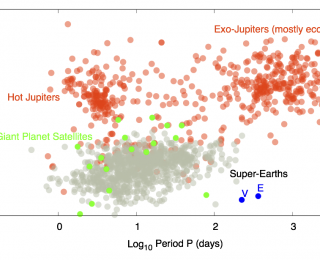
Do planets form in place, or migrate?
How planets form is still a remarkably open question. We haven’t even figured out definitively whether planets formed in the places they are now, or formed in different places and then migrated to their present locations.
by Nathan Sanders | Nov 26, 2012 | Daily Paper Summaries
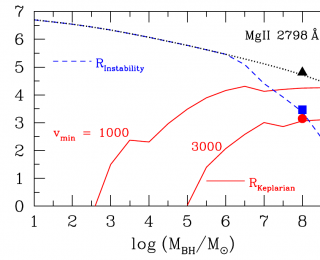
Observational surveys looking for the smallest super-massive black holes come up empty; could they be hiding in plain sight?
by Anna Rosen | Nov 8, 2012 | Daily Paper Summaries
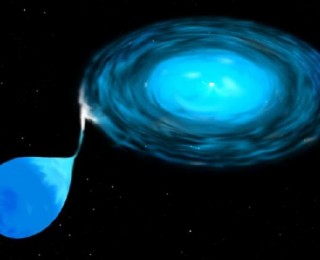
A massive white dwarf accreting from a companion can lead to accretion induced collapse turning the white dwarf into a neutron star – how can such an event be observed?
by Anna Rosen | Oct 9, 2012 | Daily Paper Summaries
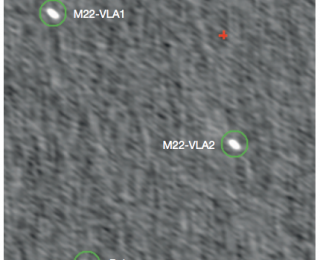
In this article, the authors report their serendipitous discovery of two stellar mass-black holes in the globular cluster M22, however theoretical work predicts that there should only be one stellar-mass black hole!
