• RSS
  • Submit a Guest Post
  • Undergraduates: Submit your Research!
  • Suggest a Paper Topic!
astrobites
  • About
    • About Astrobites
    • Meet the Authors
    • Statement of Inclusivity
    • Copyright & Permissions
  • Latest Research
    • Daily Paper Summaries
    • Classics
    • Undergrad Research
    • Physical Review Coverage
  • Beyond astro-ph
    • Beyond astro-ph Library
    • Interviews
    • Career Navigation
    • Personal Experiences
    • Current Events
    • Teaching with Astrobites
  • Guides
    • EM Spectrum
    • Galaxies & AGNs
    • Spectroscopy and Spectral Lines
    • Adaptive Optics
    • Gravitational Waves
    • Transient Astronomy
    • Astrophysical Software
    • Graduate School
    • Writing a personal statement for grad apps
    • First Observing Run
    • …More Guides!
Select Page
How to Build a Low-Density Super-Earth

How to Build a Low-Density Super-Earth

by Courtney Dressing | Apr 26, 2012 | Daily Paper Summaries

Many Super-Earths appear to be less dense than the Earth. How do such planets form? Could a rocky Super-Earth accrete a hydrogen-helium atmosphere in-situ?

A New Animal in the Transient Zoo

A New Animal in the Transient Zoo

by Michelle Kislak | Apr 11, 2012 | Daily Paper Summaries

A theoretical study of what we can expect to see when a hot Jupiter crashes into its host star.
My Jet is Bigger than Yours: Prograde vs. Retrograde Black Holes

My Jet is Bigger than Yours: Prograde vs. Retrograde Black Holes

by Lauren Weiss | Jan 26, 2012 | Daily Paper Summaries

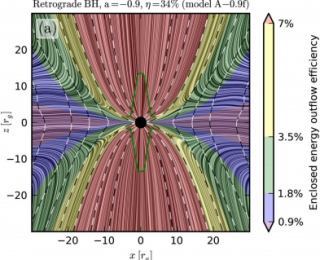
How do you measure a black hole’s rotation? Jets might be the answer!
How to Slow Down a Star

How to Slow Down a Star

by Evan Schneider | Jan 25, 2012 | Daily Paper Summaries

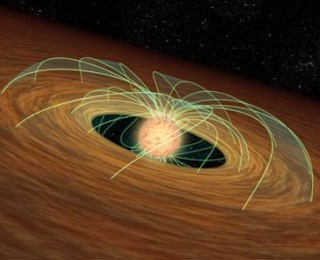
Young massive stars have a variety of different rotation rates, but what sets these initial speeds? In this paper, the authors investigate whether magnetic fields could be the answer.
The Many Modes of Black Hole Accretion

The Many Modes of Black Hole Accretion

by Guest | Jun 5, 2011 | Daily Paper Summaries

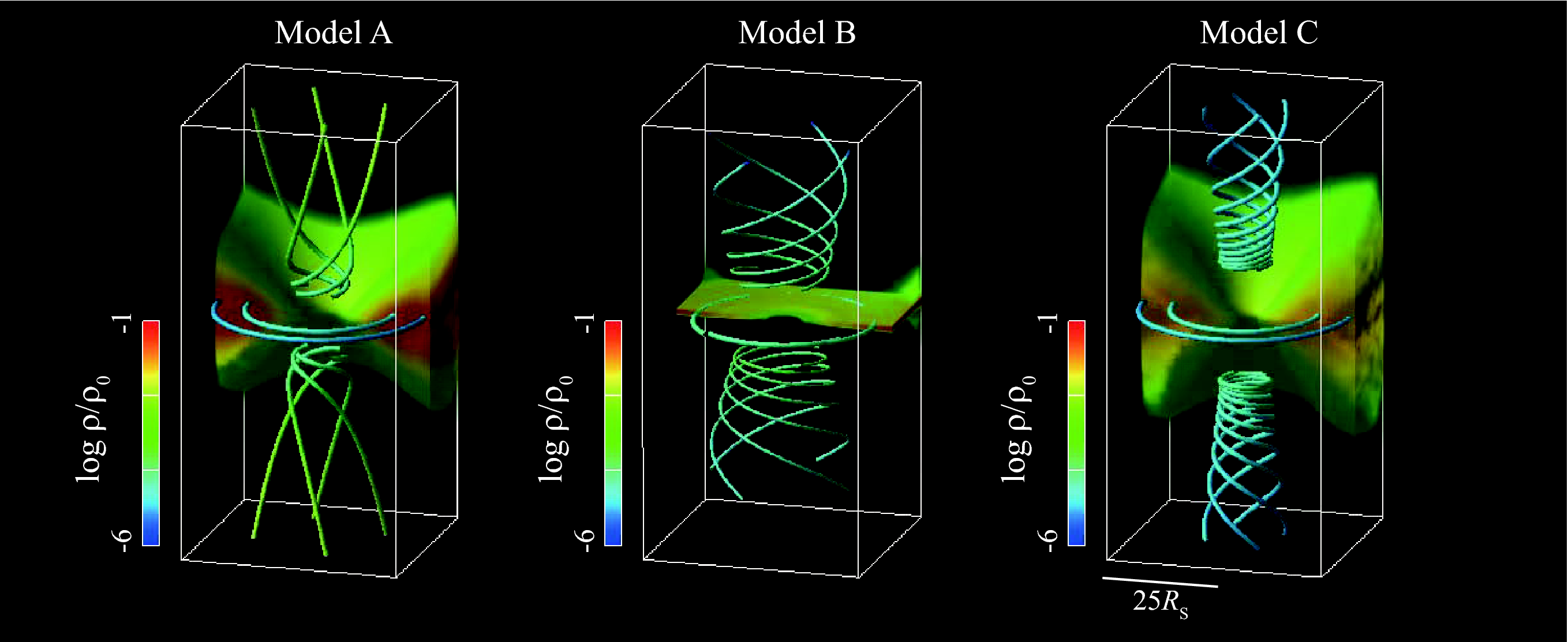
New simulations explore the mechanisms by which black holes grow.
Intrinsic Differences in AGN Accretion Rates

Intrinsic Differences in AGN Accretion Rates

by Evan Schneider | Mar 7, 2011 | Daily Paper Summaries

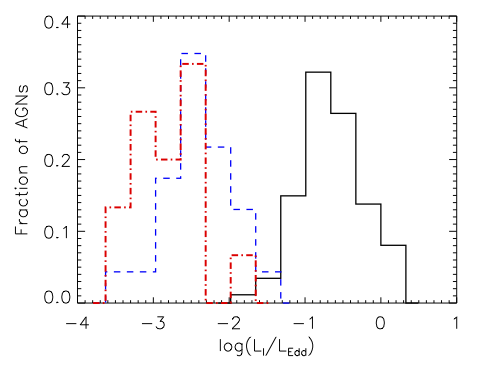
An investigation of a large sample of type I and II AGN yields a unification scheme based on accretion rate.

« Older Entries
Next Entries »

Loading

Follow our socials

  • Bluesky
  • Facebook
  • Instagram
  • RSS Feed

More Posts About

AAS AGN astronomy astrophysics binary stars black holes cosmology dark matter dwarf galaxies exoplanets galaxies galaxy evolution gravitational waves habitability JWST Kepler Milky Way observations planetary science planet formation protoplanetary disks radio astronomy simulations solar system spectroscopy star formation stars stellar evolution supernovae theory

Posts by Category

  • Accessibility
  • Applications
  • Beyond
  • Book Reviews
  • Career Navigation
  • Classics
  • Climate Change
  • Course Assignments
  • Crossposts
  • Current Events
  • Daily Paper Summaries
  • Game Reviews
  • Guides
  • Historical Astronomy
  • Instrumentation
  • Interviews
  • Outreach
  • Personal Experiences
  • PRJ
  • Quick Notes
  • Satellites
  • Teaching
  • Undergraduate Research

More Astronomy

  • AAS
  • AAS Nova
  • astro-ph
  • AstroBetter
  • APOD

Read Astrobites in Other Languages

  • Astrobitos (Spanish)
  • Astropontos (Portuguese)
  • staryab (Farsi)

Listen to Astrobites

  • astro[sound]bites

Discover More Incredible Science

  • ScienceBites Network
  • RSS

© 2026 Astrobites | All Rights Reserved | Supported by AAS | Designed by Elegant Themes | Powered by WordPress