UR #2: Near-Earth Objects and Hot Stars
Here’s the second installment in our series featuring undergraduate research!

Here’s the second installment in our series featuring undergraduate research!

Vesta is a particularly interesting object for learning about the early solar system. It is the second biggest asteroid in the asteroid belt (after Ceres) and is believed to be the sole surviving intact member of a class of objects called planetary embryos. The rest of these embryos either assembled into the planets in the solar system today or were broken apart into smaller asteroids and dust by collisions. By studying Vesta, we can learn about how protoplanets formed and evolved.
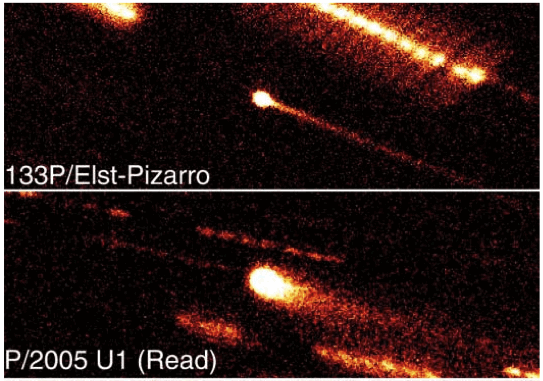
In 2006 Hsieh & Jewitt published the discovery of several main belt asteroids observed to have tails (just like comets do), which activate when nearest the Sun (just like comets do). In this paper, Licandro et al. test the origins of two so-called “main belt comets” by looking at spectra.
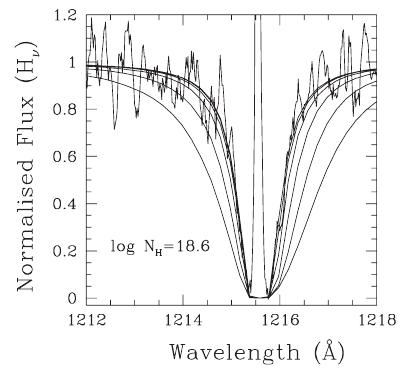
Compositional investigations of comets have suggested that they are “icy dirtballs,” so would it be possible to detect traces of hydrogen and oxygen if they were flung from one stellar system into the atmosphere of another star?