Reconstructing the orbit of the Chelyabinsk meteoroid
A pair of Colombian scientists has made the first attempt to figure out the meteoroid that exploded over Russia last month.

A pair of Colombian scientists has made the first attempt to figure out the meteoroid that exploded over Russia last month.
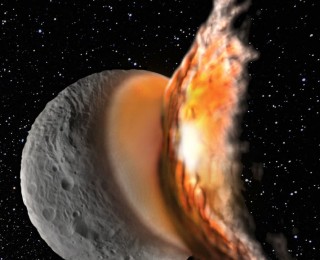
The asteroid Vesta has been scared by two giant impacts, dredging up material from deep below its surface. New simulations of the impacts allow us to trace where the material should end up and creates a conflict between theory and observation.
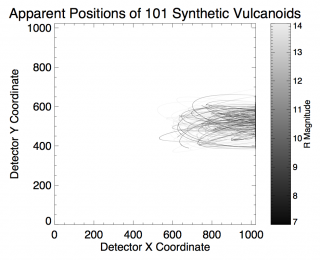
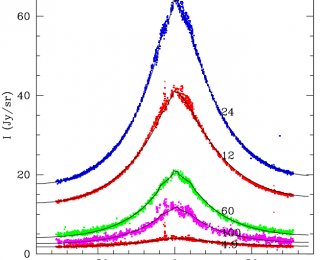
The Solar System’s interplanetary dust (called zodiacal dust) can be a source of noise in infrared and optical observations, but it also holds information about the recent history of the Solar System. This new and improved model of the zodiacal dust reveals the relative contributions to the dust by asteroids, comets, and interstellar dust.
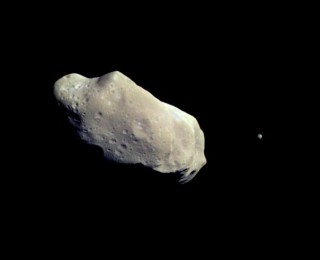
Let’s be serious for a moment: nothing dire is going to happen on December 21st. Rest easy. But in celebration I’ve decided to count down my top five favorite astronomical doomsday scenarios, ordered from most to least plausible.
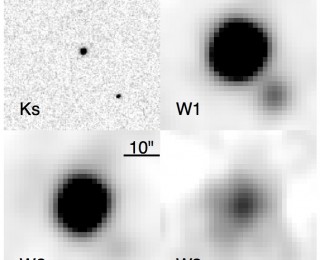
Astronomers like to find cool things. The first Earth-sized planet. The most distant galaxy yet. Two stars that merged while we watched. The coolness factor is certainly one reason why we keep at it – who wouldn’t want to be the first to find an Earth-sized planet, or the first human to see light from a galaxy that’s existed for billions of years? But there’s also a compelling scientific reason to search for these oddballs. This paper reports on the likely discovery of dust around a pair of binary stars.