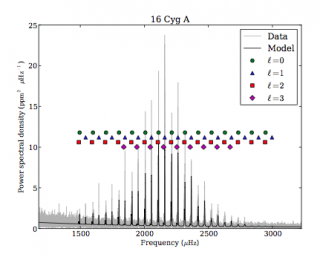
Asteroseismic Spin Drs
If you didn’t know already, asteroseismology is awesome. Read on to hear why…

If you didn’t know already, asteroseismology is awesome. Read on to hear why…
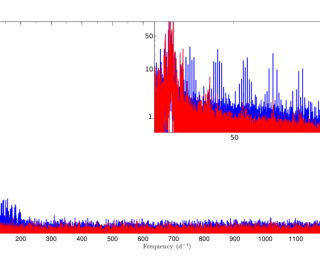
Astronomical data gathered over time has gaps. Even the most reliable space telescopes suffer from occasional pauses in their otherwise constant watchfulness. Why are gaps a problem? Can’t astronomers just analyze the short chunks of data that don’t have gaps? The answer: Fourier transforms.
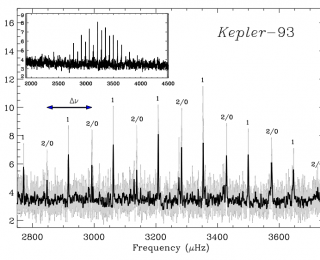
Kepler-93b is a super-Earth with a radius of 1.481 Earth radii, plus or minus Long Island.
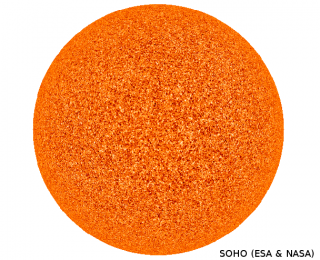
Gravitational waves passing through our solar system make the Sun ring like a bell. Can their effect be measured to learn about the violent phenomena that caused them?
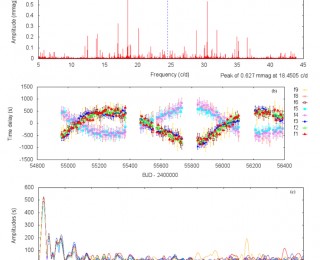
How do pulsating stars give away their secret identities as binary dance partners? In this paper, the authors demonstrate a new way to not only detect binaries we may have missed in the Kepler data, but also to measure their velocities without spectra.
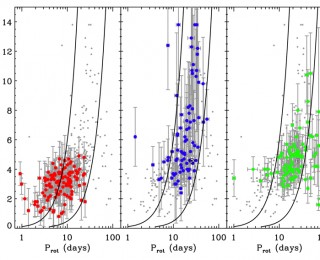
We have repeatedly seen how Kepler goes above and beyond its original mission of finding exoplanets. Today’s paper is no exception.