by Elisabeth Newton | Jul 5, 2011 | Daily Paper Summaries
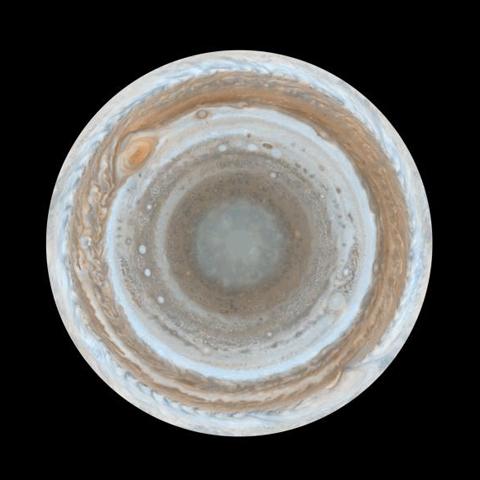
In this paper, techniques from helioseismology – using waves to learn about the interior of the Sun – are applied to yet another object: Jupiter. Because Jupiter is largely a fluid, like the Sun, astronomers have expected it to show global seismic behavior since the mid-1970s; the signal was even theorized to be about the same magnitude as solar oscillations. However, attempts to detect Jupiter’s global oscillations in the 80s and 90s were largely unsuccessful.

by Elisabeth Newton | May 26, 2011 | Career Navigation, Personal Experiences
Over the past three and a half days, I joined astronomers from all over the world for the 218th meeting of the American Astronomical Society. The AAS holds two major meetings every year, one in the winter and one in the summer. This year’s summer conference in Boston just wrapped up and in this astrobite I’ll report on two of the talks I attended.
by tonypan | Apr 2, 2011 | Daily Paper Summaries
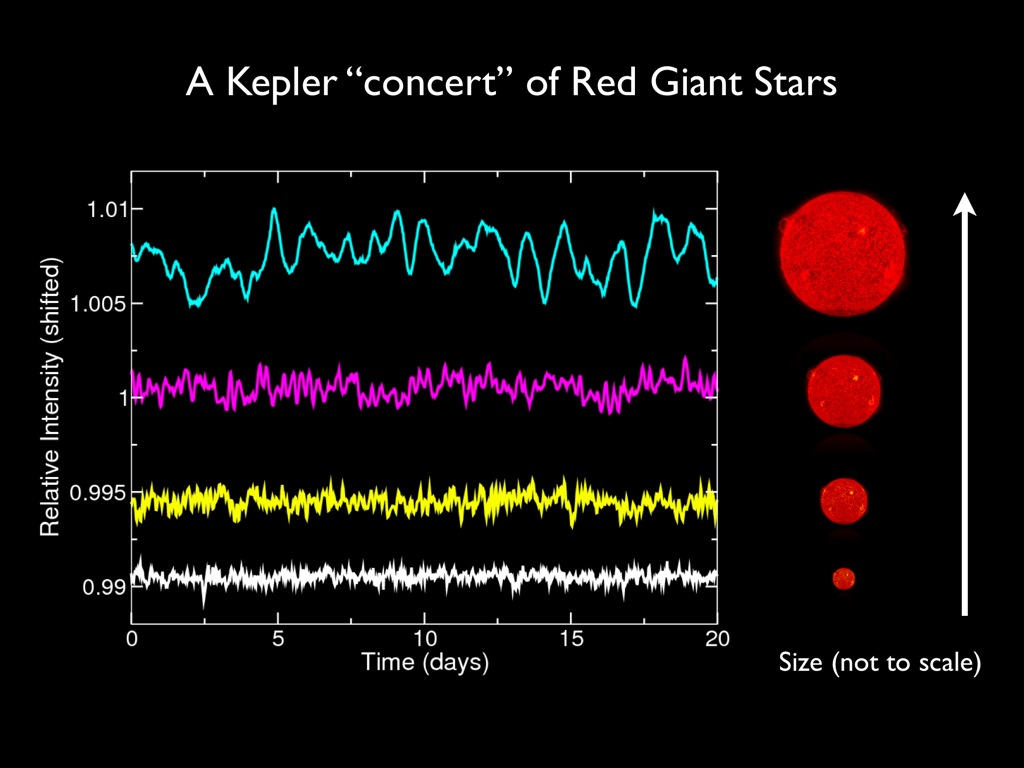
Previously, it was impossible to find out the inner source behind a red giant’s light – hydrogen fusion in a shell, or helium fusion in the core? Using Kepler, the authors of this paper show how to do this observationally using asteroseismology.
