by Jaime Green | Feb 28, 2014 | Daily Paper Summaries
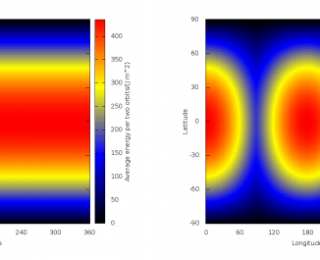
Planets orbiting close to type-M dwarf stars are in the habitable zone, but if their orbits are in a 3:2 spin resonance, do their long, strange days and nights have a chance of supporting photosynthetic life?
by Jaime Green | Nov 29, 2013 | Daily Paper Summaries
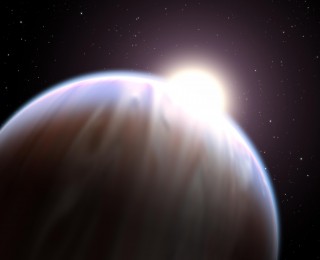
In search of a good origin story for the building blocks of life, the authors of this paper have set their sights higher. Literally higher, to exoplanets’ skies.
by Erika Nesvold | Nov 15, 2013 | Daily Paper Summaries
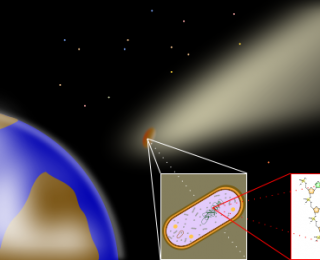
Can life spread from Earth to the moons of Jupiter and Saturn on rock ejected from meteoroid collisions? The authors of this paper start on answering this question by asking if ejected material from Earth can even reach the gas giants’ moons. The answer is yes, so it’s possible that microbial Earthlings have already traveled a lot farther than human ones.
by Sukrit Ranjan | Oct 23, 2013 | Daily Paper Summaries
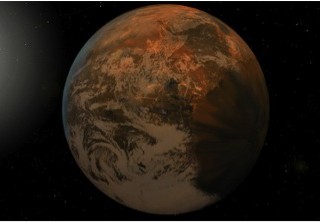
This paper asks what the biosphere of the Earth will look like billions of years from now, when the era of life is ending. What biosignatures might we detect from a dying planet?
by Sukrit Ranjan | Aug 13, 2013 | Daily Paper Summaries
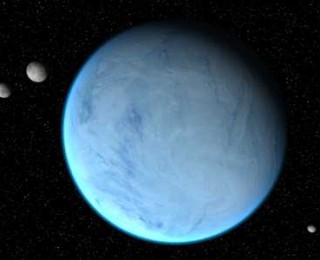
This article uses theoretical modeling to estimate the influence of ice and snow on the habitability of extrasolar planets. This work differentiates itself from past efforts by including the influence of the atmosphere, and by considering planets orbiting M-dwarfs in addition to Sun-like stars.
by Nick Hand | Jun 20, 2013 | Daily Paper Summaries
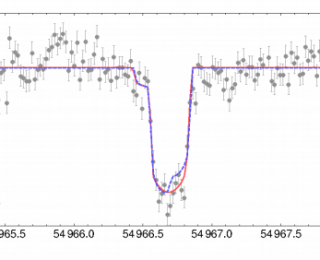
The Hunt for Exomoons with Kepler project has conducted the first ever search for a moon around a planet in the habitable zone. While they find no evidence for such a moon, they demonstrate that Earth-sized and possibly habitable moons should be easily detectable with the current Kepler data.
