
by Nick Ballering | Apr 23, 2013 | Daily Paper Summaries
Detailed atmospheric models reveal that planets can be habitable much closer to their host star than previously thought, provided they have desert-like climates. This expanded definition of the habitable zone increases the number of planets that could support life by a factor of 2-3.
by Sukrit Ranjan | Mar 13, 2013 | Daily Paper Summaries
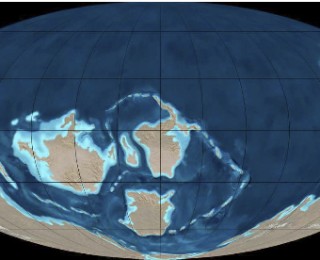
As we discover exoplanets in droves and the first hints of habitable worlds emerge, astronomers are starting to look to the next step: the search for life on those worlds.
by Shannon Hall | Feb 10, 2013 | Daily Paper Summaries
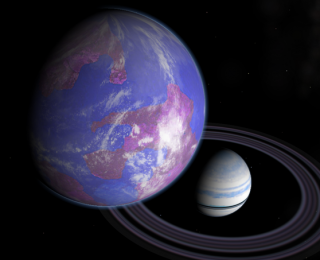
Some exoplanets seem to have walked directly out of the best science fiction movies. Taking these planets into example, the question of habitability seems like a joke. But what if we stopped looking at these extreme worlds and turned our eyes to their moons instead? Surely their moons are less extreme. And given that our own Jupiter hosts 67 moons, surely they’re more abundant. Can such extreme planets host habitable moons? The 36-page paper written by Heller and Barnes attempts to address this question.
by Sukrit Ranjan | Jan 17, 2013 | Daily Paper Summaries
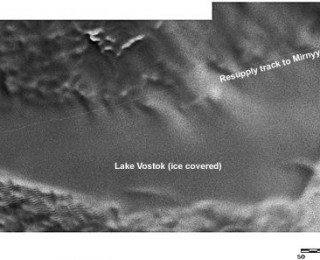
Paper Title: On the Abundances of Noble and Biologically Relevant Gases in Antarctica Authors: O. Mousis et al First Author’s Affiliation: Universite de Franche-Comte, Bensancon-Cedex, France Journal: Astrobiology (Accepted) BackgroundLake Vostok is an underground (well – underice) lake in Antarctica. It’s been buried under 4 kilometers of ice for 1-15 million years, and is the closest thing we have to a real-life “Lost World”. Life in this lake, if any, has evolved in isolation for millions of years, deprived of access to sunlight and direct contact with the atmosphere. What new cellular mechanisms might have evolved here? How does isolation affect ecosystems? Questions like these are why biologists are excited about Lake Vostok – and why care is being taken to avoid contamination when drilling down to study it.Astrobiologists are particularly excited about this lake because conditions in Vostok are similar to what we might expect to find on Jupiters’ moon Europa, which is thought to similarly host an oxidizing liquid water ocean protected by a layer of ice. The pressure at a depth of 30 km on Europa is equivalent to the pressure in lake Vostok. Understanding life in lake Vostok will give clues as to what kind of life might persist in Europa’s oceans.This paperThe lake is not completely isolated from its environment. The ice above the lake is filled with bubbles of trapped air, and ice layers move down over time transporting this air. Melting at the lake/ice interface can supply dissolved gas to the lake. However, this picture is complicated by the existence of clathrates. Clathrates are crystalline structures that can trap other molecules. Depending...
by Courtney Dressing | Dec 20, 2012 | Daily Paper Summaries
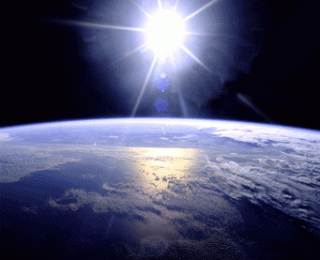
How would the spectrum of the Earth change if our planet orbited a hotter or cooler star? Would alien astronomers still be able to detect signs of life?
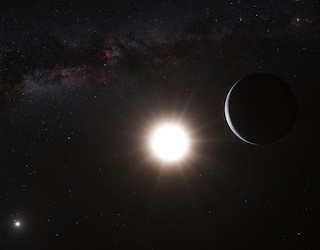
by Courtney Dressing | Oct 26, 2012 | Daily Paper Summaries
Astronomers recently announced the discovery of a short period Earth-mass planet in the Alpha Centauri system. Could Earth-mass planets exist in the habitable zones of binary stars?
