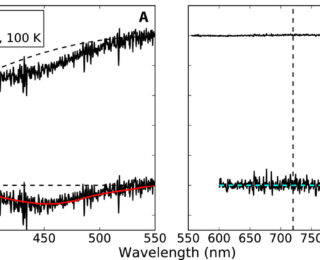
Table Salt detected on Europa!
Using a spectrometer on the Hubble Space Telescope, astronomers have detected sodium chloride, a.k.a., table salt, on the surface of Europa!

Using a spectrometer on the Hubble Space Telescope, astronomers have detected sodium chloride, a.k.a., table salt, on the surface of Europa!

New research by astronomers at Cornell’s Carl Sagan Institute uncovers a novel way to search for the existence of life in the Universe. Flares from red dwarf stars, commonly believed to pose serious problems for habitability, might actually expose hidden biospheres through the process of biofluorescence.
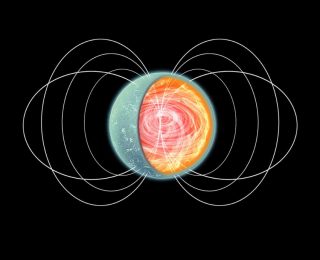
Earth life has a definite preference for particular kinds of molecules. Where did life get its taste for left-handed amino acids?
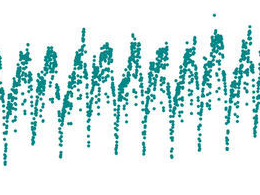
Observations of potential biosignatures on other worlds are slowly getting within reach. What kind of signal might be among the lowest-hanging fruit?
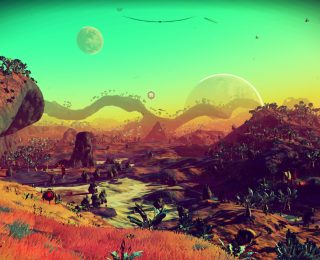
For life as we know it, atmospheric composition plays a huge part in planetary habitability. Today we explore a theoretical framework for characterizing and predicting planetary atmospheres, and how that framework can help in the search for Earth-like life on planets beyond our own.
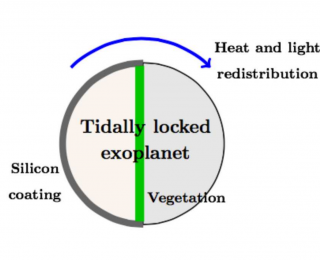
Alien civilizations might build large-scale arrays of solar cells to harness energy from their host star. Such coverage of photovoltaic materials have distinctive and probably detectable spectral features, similar to the “red edge” of vegetation.