• RSS
  • Submit a Guest Post
  • Undergraduates: Submit your Research!
  • Suggest a Paper Topic!
astrobites
  • About
    • About Astrobites
    • Meet the Authors
    • Statement of Inclusivity
    • Copyright & Permissions
  • Latest Research
    • Daily Paper Summaries
    • Classics
    • Undergrad Research
    • Physical Review Coverage
  • Beyond astro-ph
    • Beyond astro-ph Library
    • Interviews
    • Career Navigation
    • Personal Experiences
    • Current Events
    • Teaching with Astrobites
  • Guides
    • EM Spectrum
    • Galaxies & AGNs
    • Spectroscopy and Spectral Lines
    • Adaptive Optics
    • Gravitational Waves
    • Transient Astronomy
    • Astrophysical Software
    • Graduate School
    • Writing a personal statement for grad apps
    • First Observing Run
    • …More Guides!
Select Page
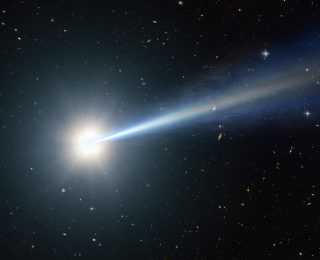
Blown away by Black Holes: Losing Planetary Atmospheres to Quasar Radiation

Blown away by Black Holes: Losing Planetary Atmospheres to Quasar Radiation

by Jamila Pegues | May 30, 2017 | Daily Paper Summaries

When it comes to habitability for Earth-like life, we’ve got more than just liquid water to worry about. Today’s astrobite looks at how planets could lose portions of their atmospheres to quasar radiation.
It turns out the Sun is more chill than we previously thought

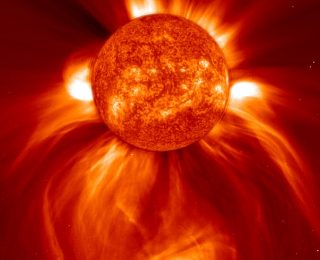
It turns out the Sun is more chill than we previously thought

by Leonardo dos Santos | Nov 23, 2016 | Daily Paper Summaries

That giant blob of plasma right there in our cosmic backyard rules our everyday lives, and yet it still holds many surprises. We will see today that the Sun is significantly less active than other stars similar to it, and how this affects our future studies on the subject.
Searching for signs of life with the James Webb Space Telescope

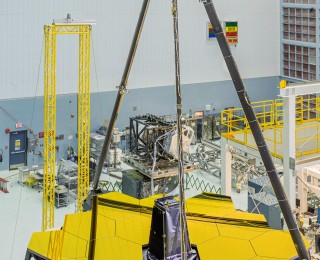
Searching for signs of life with the James Webb Space Telescope

by David Wilson | May 26, 2016 | Daily Paper Summaries

The James Webb Space Telescope will be the largest space observatory built to date. The authors of today’s paper suggest one possible use for the giant new telescope: Searching for signs of life on other planets.
Optimizing the search for pale blue dots

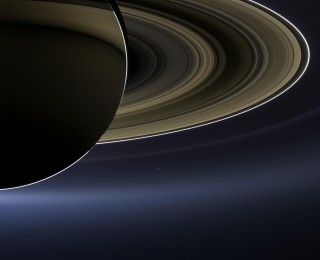
Optimizing the search for pale blue dots

by Leonardo dos Santos | Jan 25, 2016 | Daily Paper Summaries

How can we find other pale blue dots? Today’s paper studies what could be the most time-effective way to search for Earth-like exoplanets, just by looking at their colors.
Sustainable Climates on Greenhouse Super-Earths?

Sustainable Climates on Greenhouse Super-Earths?

by Tim Lichtenberg | Nov 30, 2015 | Daily Paper Summaries

Can life on exo-worlds build its own habitable environment in extremely unfavourable conditions?
Nature’s Starships Vol. II – A Hitchhiker’s Guide to the Bloody Cold Beginnings

Nature’s Starships Vol. II – A Hitchhiker’s Guide to the Bloody Cold Beginnings

by Tim Lichtenberg | Jul 24, 2015 | Daily Paper Summaries

How and where did the first organic molecules emerge? Sophisticated chemistry models for the synthesis of amino acids within planetesimals can help us to decipher these mysteries.

« Older Entries
Next Entries »

Loading

Follow our socials

  • Bluesky
  • Facebook
  • Instagram
  • RSS Feed

More Posts About

AAS AGN astronomy astrophysics binary stars black holes cosmology dark matter dwarf galaxies exoplanets galaxies galaxy evolution gravitational waves habitability JWST Kepler Milky Way observations planetary science planet formation protoplanetary disks radio astronomy simulations solar system spectroscopy star formation stars stellar evolution supernovae theory

Posts by Category

  • Accessibility
  • Applications
  • Beyond
  • Book Reviews
  • Career Navigation
  • Classics
  • Climate Change
  • Course Assignments
  • Crossposts
  • Current Events
  • Daily Paper Summaries
  • Game Reviews
  • Guides
  • Historical Astronomy
  • Instrumentation
  • Interviews
  • Outreach
  • Personal Experiences
  • PRJ
  • Quick Notes
  • Satellites
  • Teaching
  • Undergraduate Research

More Astronomy

  • AAS
  • AAS Nova
  • astro-ph
  • AstroBetter
  • APOD

Read Astrobites in Other Languages

  • Astrobitos (Spanish)
  • Astropontos (Portuguese)
  • staryab (Farsi)

Listen to Astrobites

  • astro[sound]bites

Discover More Incredible Science

  • ScienceBites Network
  • RSS

© 2026 Astrobites | All Rights Reserved | Supported by AAS | Designed by Elegant Themes | Powered by WordPress