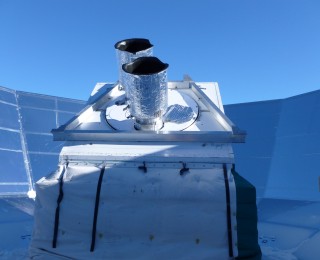
Astrobites on the Ice, Part 3: A Tour of DSL and MAPO
I’m spending a month working on a telescope at the South Pole. In this post, we take a tour of the two observatory buildings hosting Cosmic Microwave Background experiments.

I’m spending a month working on a telescope at the South Pole. In this post, we take a tour of the two observatory buildings hosting Cosmic Microwave Background experiments.
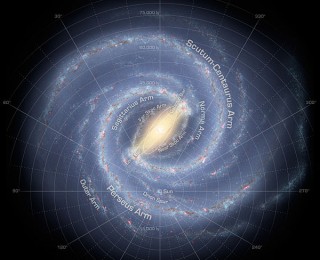
Everything in our galaxy is moving– you, the earth underneath you, the sun, other stars– everything. However, it turns out that figuring out how fast some of these things are moving is surprisingly difficult, and can have Galactic-sized implications!
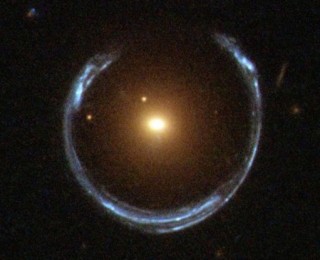
I recently attended a two-week crash course in the “Astrophysical Applications of Gravitational Lensing”. In this post, I overview a few of the ways astronomers employ lensing to study the Universe, from extrasolar planets to distant quasars and large-scale structure.
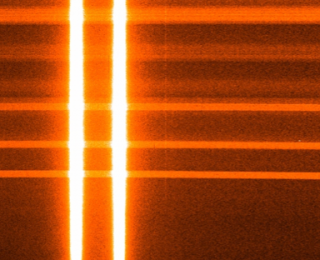
The field of exoplanet research is rapidly expanding. Presented here are the results from a recent ground-based study of an exoplanet’s atmosphere. We have characterized the atmospheres of less than ten exoplanets. By opening up the frontier for ground-based telescopes to do such ground-breaking research we will be able to characterize the atmospheres of hundreds of exoplanets.
Alice Allen writes to encourage you to post your codes in the Astrophysics Source Code Library, a repository for all software used in research.

How well do stellar models match? Would astronomers using different stellar models and identical data determine consistent fits?