by Chris Faesi | Jul 30, 2012 | Daily Paper Summaries
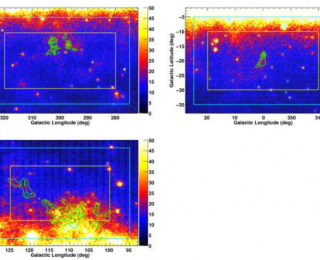
A Fermi/LAT study of the ISM using gamma rays finds evidence for missing gas and variations in the CO-to-molecular gas conversion factor.
by Guest | Jul 19, 2012 | Daily Paper Summaries
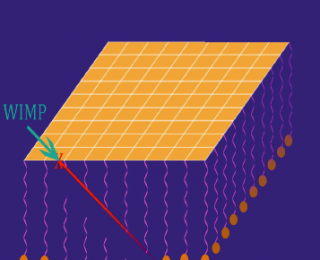
Can DNA be used to detect dark matter? Guest author Elisa Chisari explains how biology and physics can combine to teach us more about the universe.
by Justin Vasel | Jun 21, 2012 | Daily Paper Summaries
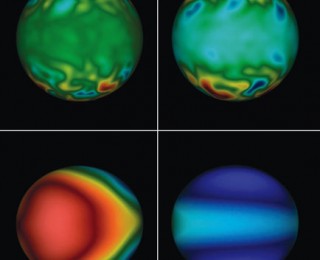
“Characterizing atmospheres beyond the Solar System is an endeavor no longer confined to the realm of science fiction.”
by Chris Faesi | Jun 9, 2012 | Personal Experiences
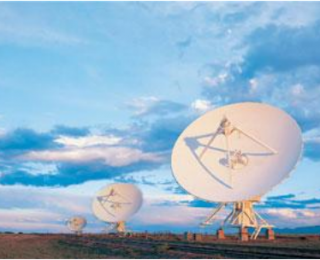
Part I: Let the Synthesis BeginI recently participated in the 13th Synthesis Imaging (a.k.a. Interferometry) Workshop (SIW) hosted by the National Radio Astronomy Observatory (NRAO) in Socorro, NM from May 28 – June 5, 2012. It was incredibly informative, useful, and fun, and I’d like to share some of my experiences – particularly regarding what it’s like to attend your first workshop in astronomy, including both the official events and after hours. This is the first post in the series describing my time at the SIW, covering the introduction and the first two days (May 28-29). IntroductionRadio interferometry – combining signals from multiple antennas to mimic the effective resolution of a single, larger dish – is a complex business. You have to know the exact locations of your antennas, utilize sophisticated electronics to control the phase delays in your signal chain, and understand and minimize noise contributions, not to mention build a boatload of antennas (along with their associated receivers, cryogenic modules, and cables). Oh, and it is also complex in that the raw data obtained, known as “visibilities”, are in fact complex numbers with a real and imaginary part! I’m not going to try to explain the details of interferometry in this article (partially because I’m still learning); for a great visual introduction to the subject, I highly recommend checking out the Virtual Radio Interferometer, a Java applet that explains and demonstrates the effects of changing visibility coverage on interferometric imaging. In addition, many of the lectures from the 13th SIW have been uploaded here in .pdf format if you’d like to follow along as I describe my experiences. And don’t...
by Courtney Dressing | May 24, 2012 | Daily Paper Summaries
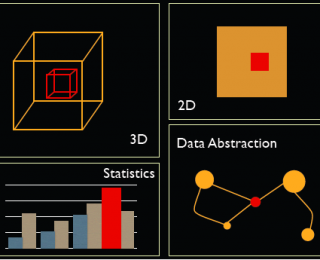
Astronomers love data, but how can we visualize multiple dimensions of data simultaneously? What should astronomers do to extract as much information as possible from our hard-earned data?
by Kirit Karkare | May 21, 2012 | Daily Paper Summaries
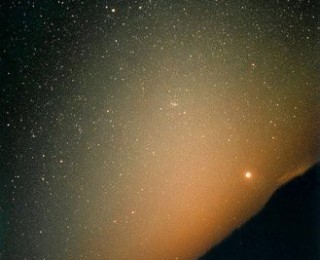
The zodiacal light may look beautiful, but it can get in the way of important observations. This paper suggests improvements to models of the dust cloud using observations from the Spitzer Space Telescope.
