
by Courtney Dressing | Apr 13, 2011 | Daily Paper Summaries
Is there a third companion in the Sirius system? Thalmann et al. conduct direct imaging observations to find out.
by Elisabeth Newton | Mar 3, 2011 | Daily Paper Summaries
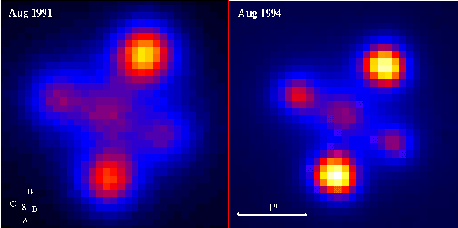
Some strong gravitational lenses exhibit what are known as “anomalous flux ratios”: the multiple images don’t have the same flux. One possible explanation for this is microlensing, which results from the gravitational influence of stars and perhaps dark matter.
by Dan Gifford | Feb 25, 2011 | Career Navigation
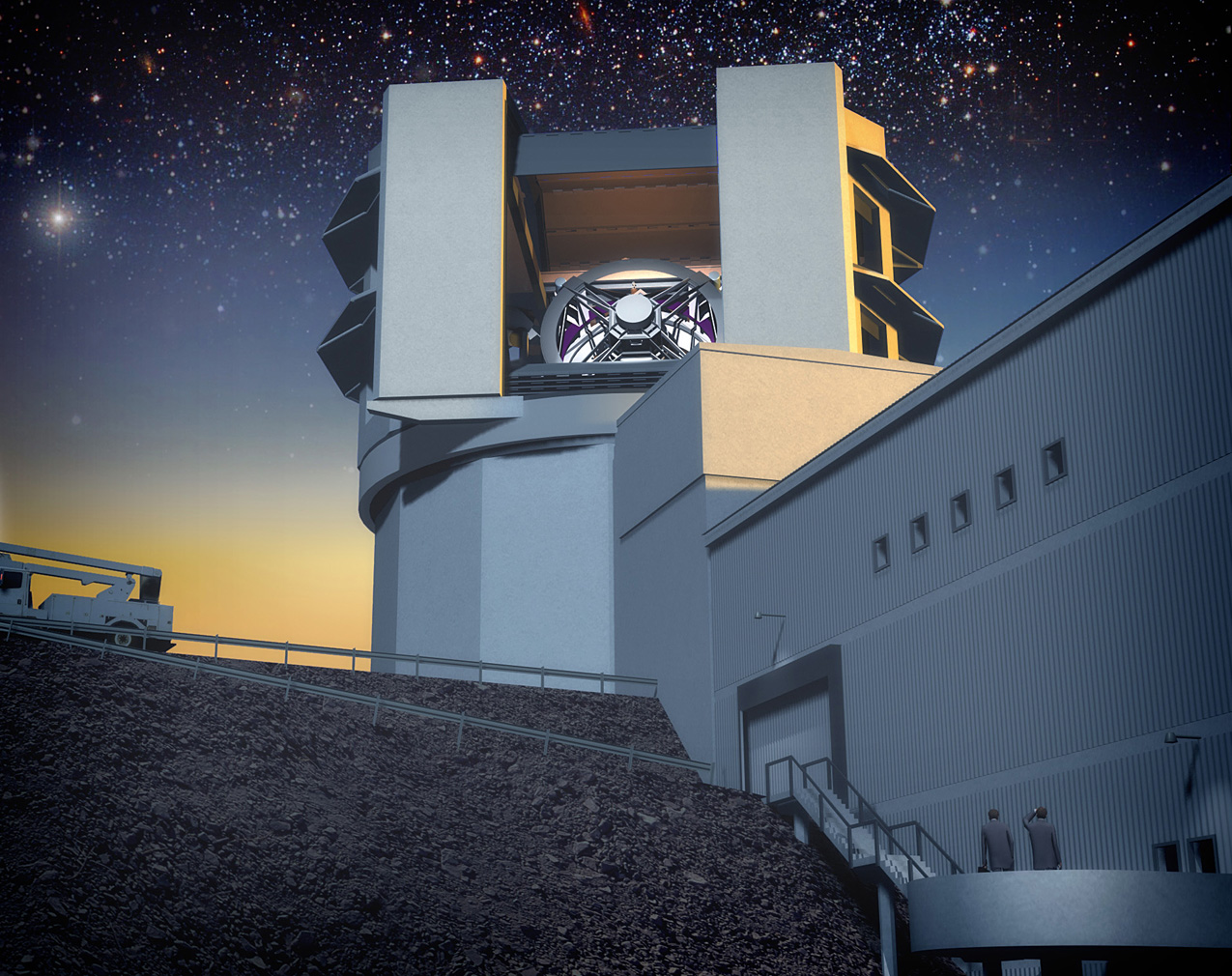
Large sky surveys like SDSS and 2MASS have become widely successful and have prompted a next generation of dedicated survey telescopes like LSST, the Dark Energy Survey, and Pan-STARRS. These telescopes will unleash a tidal wave of data into astronomers’ open arms (or external hard drives). But how do you catch a tidal wave?
by Elisabeth Newton | Feb 17, 2011 | Daily Paper Summaries
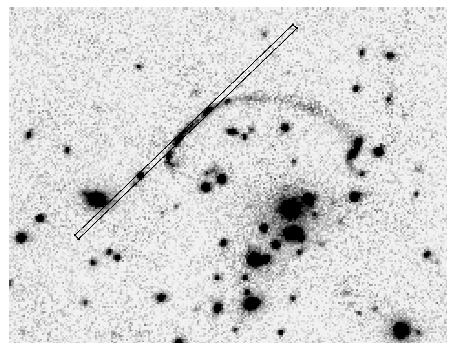
In this paper, the authors seek to explore the properties of star-forming galaxies by looking at a lensed galaxy. This galaxy has been distorted into a giant arc by the gravitational potential of a foreground galaxy cluster.
by Nathan Sanders | Feb 2, 2011 | Daily Paper Summaries, Quick Notes
Update: you can read Avi Loeb and Freeman Dyson’s discussion of this issue in our latest post.Imagine a civilization in our galaxy a trillion years in the future. Astronomers in this society may not know of a universe beyond their own galaxy. At approximately the year 100 billion, all galaxies outside the Local Group of gravitationally bound galaxies will have sped out beyond the event horizon of the observable universe and the Local Group will have long since conglomerated into a single galaxy (“Milkomeda”). The Sun will have died out long ago, but the lowest mass stars in the present-day Milky way (0.1~1 solar masses) may still be living.What’s more, the accelerating expansion of the universe predicted by the standard ΛCDM cosmology has redshifted the photons of the cosmic microwave background beyond the event horizon of the entire future universe, so future BOOMERANG or WMAP experiments will not work. Clearly, these future observers could not use the same tools we have to understand the origins of the universe. Fortunately, Harvard Professor Avi Loeb has a very interesting short paper on the arXiv today that speculates on the tools astronomers living a trillion years in the future could use to infer the standard model of cosmology we have derived from present-day observations of the universe.Loeb suggests that these future observers look for the precious few stars that have had a velocity sufficient to escape from Milkomeda (hypervelocity stars, HVSs). HVSs can be ejected from a galaxy by gravitational interactions with the supermassive black hole at the galaxy’s nucleus. After about two billion years of travel, Loeb estimates, the acceleration of...
