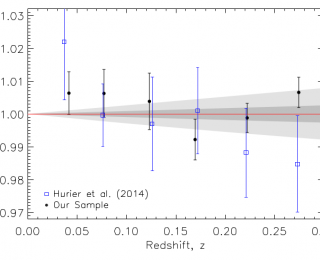
How did the Universe cool over time?
How can we measure the temperature of the Universe across cosmic epochs? Recent data from Planck suggests that the Universe’s cooling history is consistent with the Big Bang model.

How can we measure the temperature of the Universe across cosmic epochs? Recent data from Planck suggests that the Universe’s cooling history is consistent with the Big Bang model.
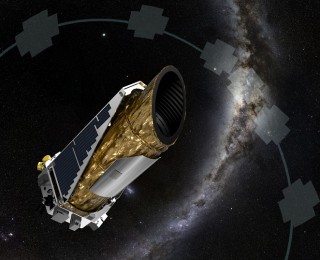
A new analysis technique, that fits simultaneously for light-curve systematics and transit signals, finds 36 planet candidates in the K2 dataset — Kepler is still in the game!
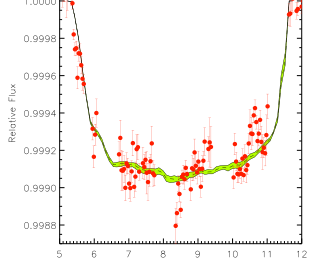
Most exoplanets are and have been detected by the transit method. Maybe, we can improve the method even further by drawing conclusions from the recent Venus transits in 2004 and 2012.
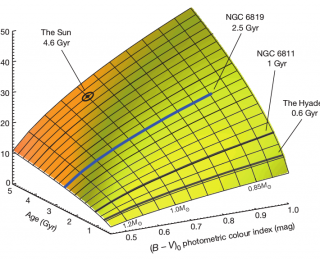
Spinning stars offer a useful way of determining the ages of star clusters
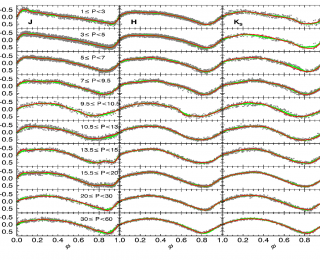
Distance is a tricky thing to measure in astronomy. We can’t use tape measures or rulers, and even more sophisticated methods like laser ranging are only good for the very nearest of neighbors, like the moon. That’s where distance indicators like Cepheids come in.
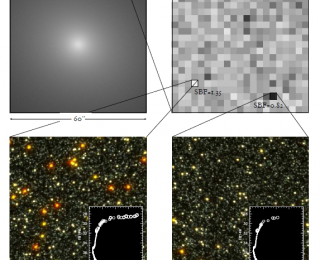
Astronomers use models to derive properties of individual stars that we cannot directly observe, such as mass, age, and radius. This is also the case for a group of stars (a galaxy or a star cluster). One problem with current stellar population models is that they remain untested for old populations of stars. The authors of this paper devise a new way to test models of old stellar populations.