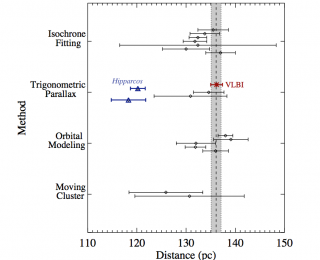
by Josh Fuchs | Sep 2, 2014 | Daily Paper Summaries
The Pleiades is one of the most well-known open clusters visible with the naked eye from Earth. But just how far away is the cluster? New results help determine a more accurate distance and suggest a troubling error in a previous study.
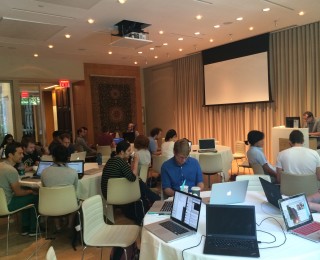
by Meredith Rawls | Jul 2, 2014 | Personal Experiences
SciCoder is an annual workshop in New York City for early-career astronomers with the tagline: How I Learned To Stop Hating Coding and Start Getting Things Done.
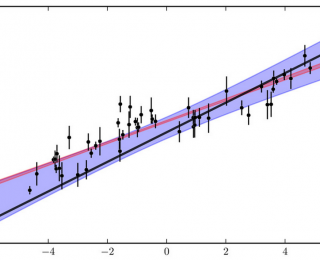
by Ben Montet | Jul 1, 2014 | Guides
A common measure of the quality of a fit is the chi-squared statistic. While common, implementation of this statistic assumes uncorrelated noise, which is much less common. Today, we discuss how to deal with noise that is correlated and why it’s important.
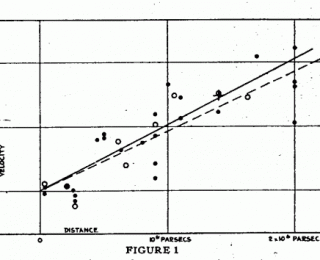
by Anson Lam | Jun 16, 2014 | Daily Paper Summaries
Different methods of measuring the Hubble constant yield slightly different values, but they are still in reasonable agreement.
by Meredith Rawls | May 5, 2014 | Daily Paper Summaries
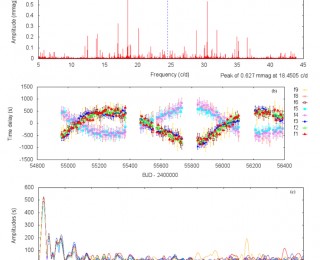
How do pulsating stars give away their secret identities as binary dance partners? In this paper, the authors demonstrate a new way to not only detect binaries we may have missed in the Kepler data, but also to measure their velocities without spectra.
by Chris Faesi | Feb 15, 2014 | Daily Paper Summaries
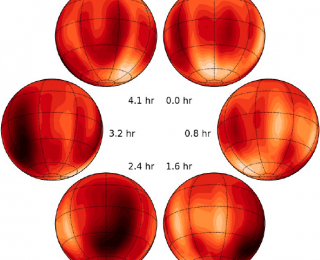
Tune in now for the first extrasolar weather map of a nearby brown dwarf, made using Doppler imaging.
