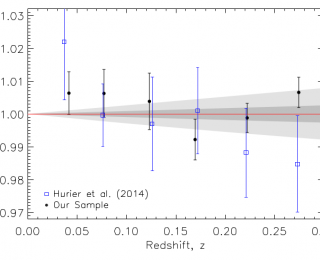
How did the Universe cool over time?
How can we measure the temperature of the Universe across cosmic epochs? Recent data from Planck suggests that the Universe’s cooling history is consistent with the Big Bang model.

How can we measure the temperature of the Universe across cosmic epochs? Recent data from Planck suggests that the Universe’s cooling history is consistent with the Big Bang model.
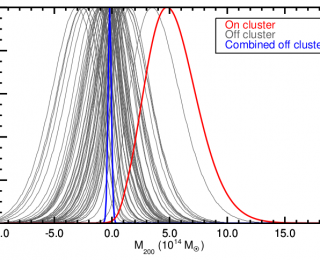
Measuring CMB distortions caused by gravitational lensing is a unique way of estimating galaxy cluster masses.
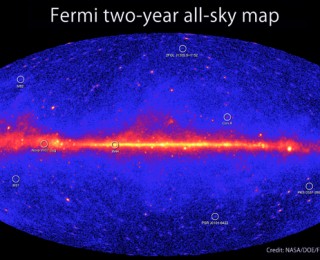
When two observations share some common information, they can be “cross-correlated” to extract it. In today’s example, we discover what the matter halos and energetic phenomena in the Universe have in common through a cross-correlation.
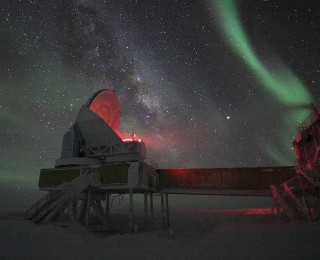
Gravitational lensing causes distortions in the polarization of the Cosmic Microwave Background. In this astrobite, we discuss recent results from the South Pole Telescope collaboration measuring patterns caused by lensing in the CMB polarization. What do these patterns tell us about the Universe?
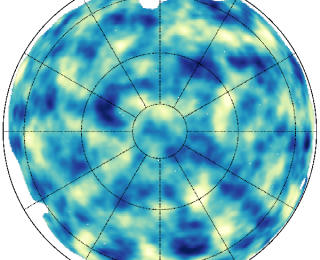
In today’s astrobite, we continue our overview of the papers from the Planck 2013 release. This time, we review papers XVII and XXIII, which discuss weak gravitational lensing of the Cosmic Microwave Background, and the isotropy of the Universe at the time this background radiation was emitted.
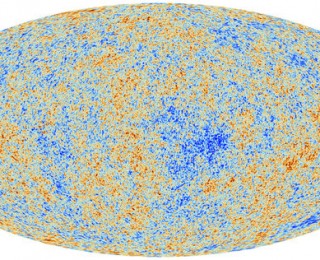
The primordial seeds of the Universe, the Cosmic Microwave Background, have been measured by the Planck satellite with unprecedented precision. In this post, we summarize some of their results on cosmological parameters and primordial non-gaussianity.