WMAP’s Closing Comments: ΛCDM Stands Strong
The final results from the WMAP satellite show agreement with the standard model of cosmology to unprecedented precision.

The final results from the WMAP satellite show agreement with the standard model of cosmology to unprecedented precision.
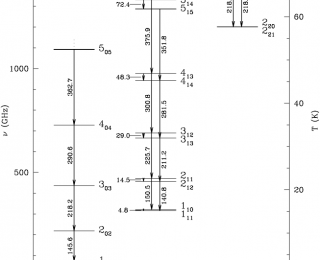
Finding molecular gas in distant galaxies can present a real challenge for astronomers, but Darling and Zeiger propose a new method to find sites of star formation: looking for absorption of the CMB by formaldehyde!
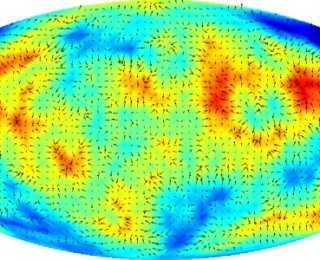
The South Pole Telescope collaboration detects the effects of gravitational lensing on the cosmic microwave background and derives improved constraints on several cosmological parameters.
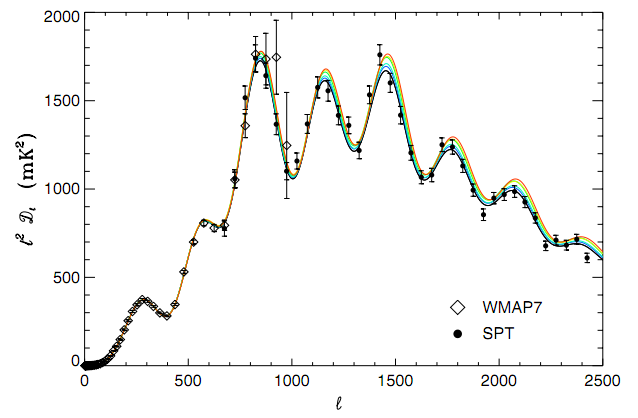
Dark energy is causing the expansion of the universe to accelerate. The most common model for dark energy has a negligible dark energy density in the early universe. The authors use measurements of the CMB power spectrum to constrain the density of dark energy in the early universe.
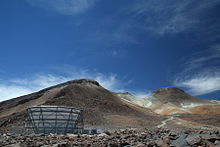
Using the WMAP power spectrum together with weak lensing data from the Atacama Cosmology Telescope, the authors of this paper show that a cosmological model including a dark energy component is required to fit the Cosmic Microwave Background data.