by Elizabeth Lovegrove | Jun 8, 2012 | Current Events
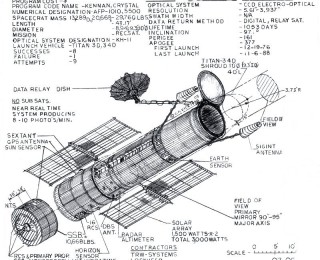
Today the National Reconnaissance Office (NRO) announced that it has given NASA not one but two fully-constructed space telescopes, roughly equivalent to Hubble with a wider field of view. The telescopes, which were offered to NASA about a year ago (a team of scientists has been considering whether to accept them in the meantime), come with all their hardware minus instruments – a total value to the agency of hundreds of millions of dollars plus years of lead time.
by Nick Hand | Feb 18, 2012 | Daily Paper Summaries
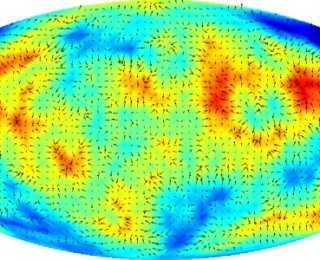
The South Pole Telescope collaboration detects the effects of gravitational lensing on the cosmic microwave background and derives improved constraints on several cosmological parameters.
by Courtney Dressing | Feb 2, 2012 | Daily Paper Summaries
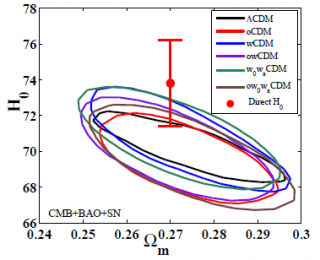
In this series of papers, the authors apply new analysis techniques to data from several galaxy redshift surveys to uncover acoustic waves from the early universe and refine measurements of cosmological parameters.
by Nick Hand | Oct 29, 2011 | Daily Paper Summaries
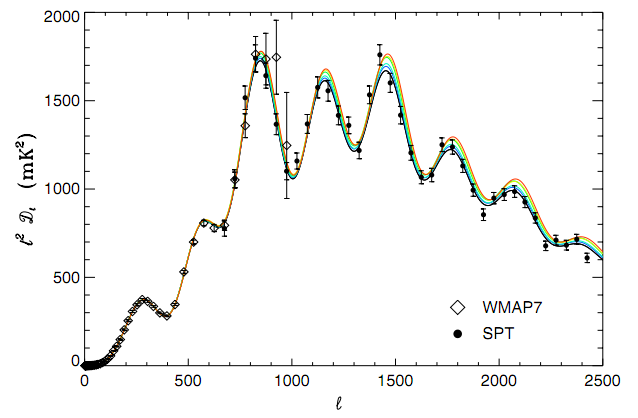
Dark energy is causing the expansion of the universe to accelerate. The most common model for dark energy has a negligible dark energy density in the early universe. The authors use measurements of the CMB power spectrum to constrain the density of dark energy in the early universe.
by Evan Schneider | May 4, 2011 | Daily Paper Summaries
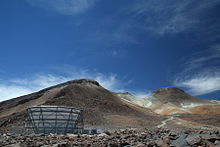
Using the WMAP power spectrum together with weak lensing data from the Atacama Cosmology Telescope, the authors of this paper show that a cosmological model including a dark energy component is required to fit the Cosmic Microwave Background data.
by jsureshcfa | Apr 11, 2011 | Daily Paper Summaries
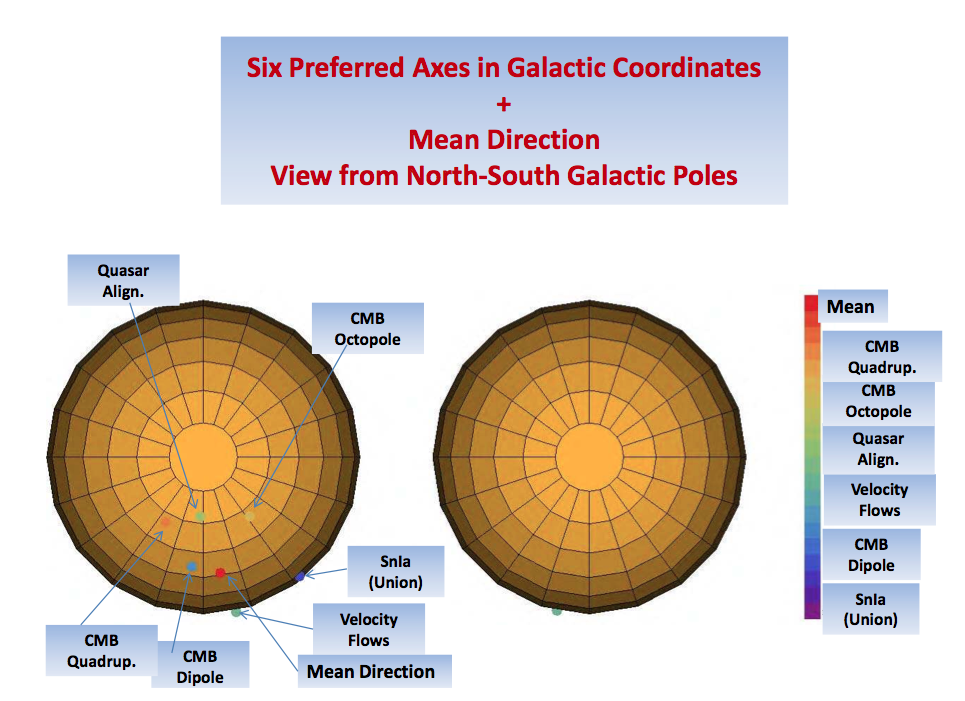
The standard model of cosmology is simple, elegant, and very successful. How do we tell that whether our model is doing well? And what phenomena does it still have trouble explaining?
