by Chris Faesi | Jan 20, 2012 | Daily Paper Summaries
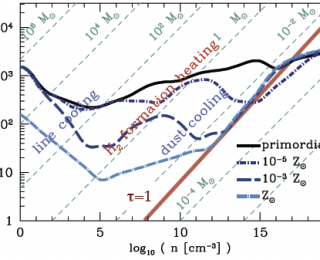
An extremely metal-poor star, which was first discussed on astrobites by Anna in September 2011, may be evidence that dust-induced fragmentation was the catalyst for the change from the top-heavy Initial Mass Function (IMF) of the first stars to the steep IMF we observe today.
by Chris Faesi | Dec 23, 2011 | Daily Paper Summaries
The LOFAR low-frequency radio interferometer is poised to make exciting discoveries in transient searches, high-energy astrophysics, and cosmology.
by Nathan Sanders | Nov 14, 2011 | Daily Paper Summaries
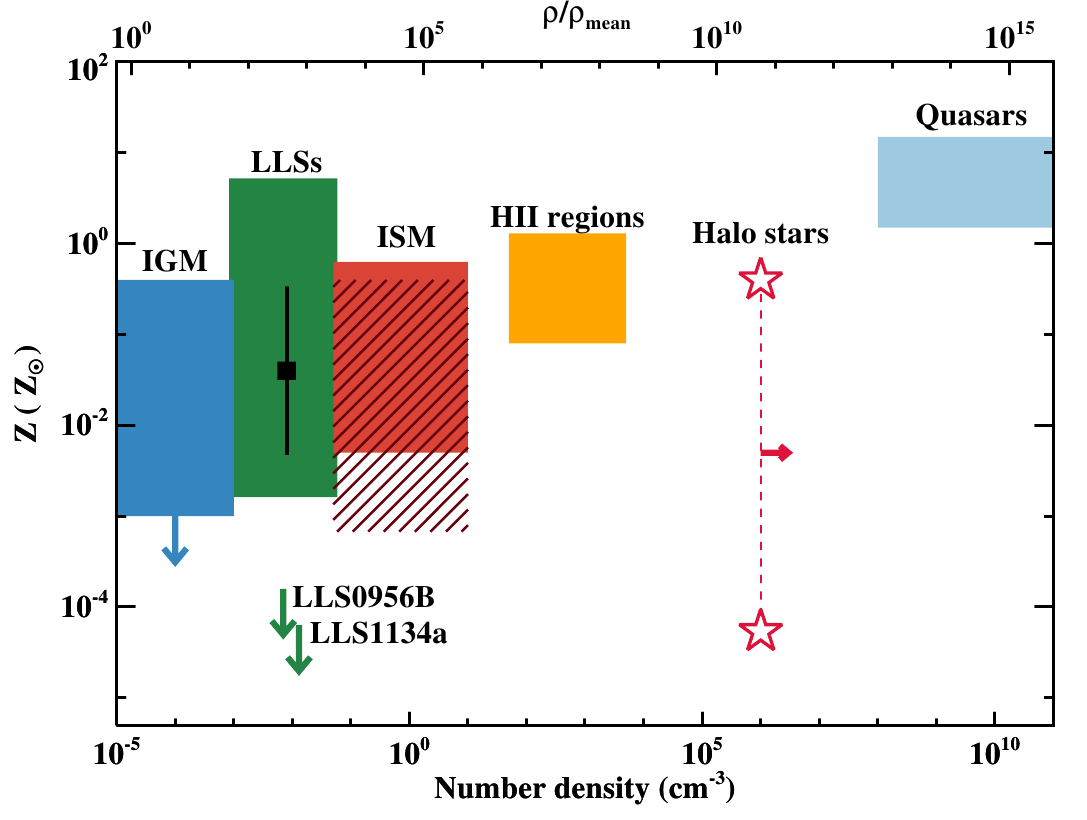
Fumagalli et al. may have observed the first example of metal-free gas untouched after the Big Bang.
by Courtney Dressing | Sep 30, 2011 | Daily Paper Summaries
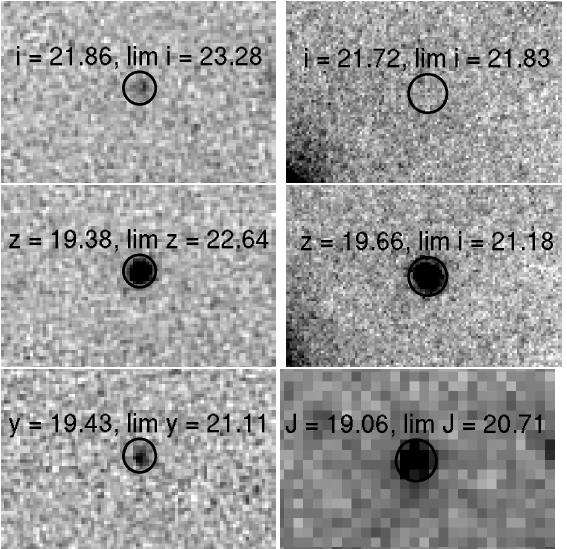
Morganson et al. announce the discovery of the first quasar discovered by Pan-STARRS. The newly detected quasar is a Broad Absorption Line quasar at a redshift of 5.73 +/- 0.02 with a z band magnitude of 19.4, a luminosity of 3.8×1047 erg/s, and an estimated black hole mass of 6.9×10⁹ solar masses.
by Dan Gifford | Feb 18, 2011 | Daily Paper Summaries
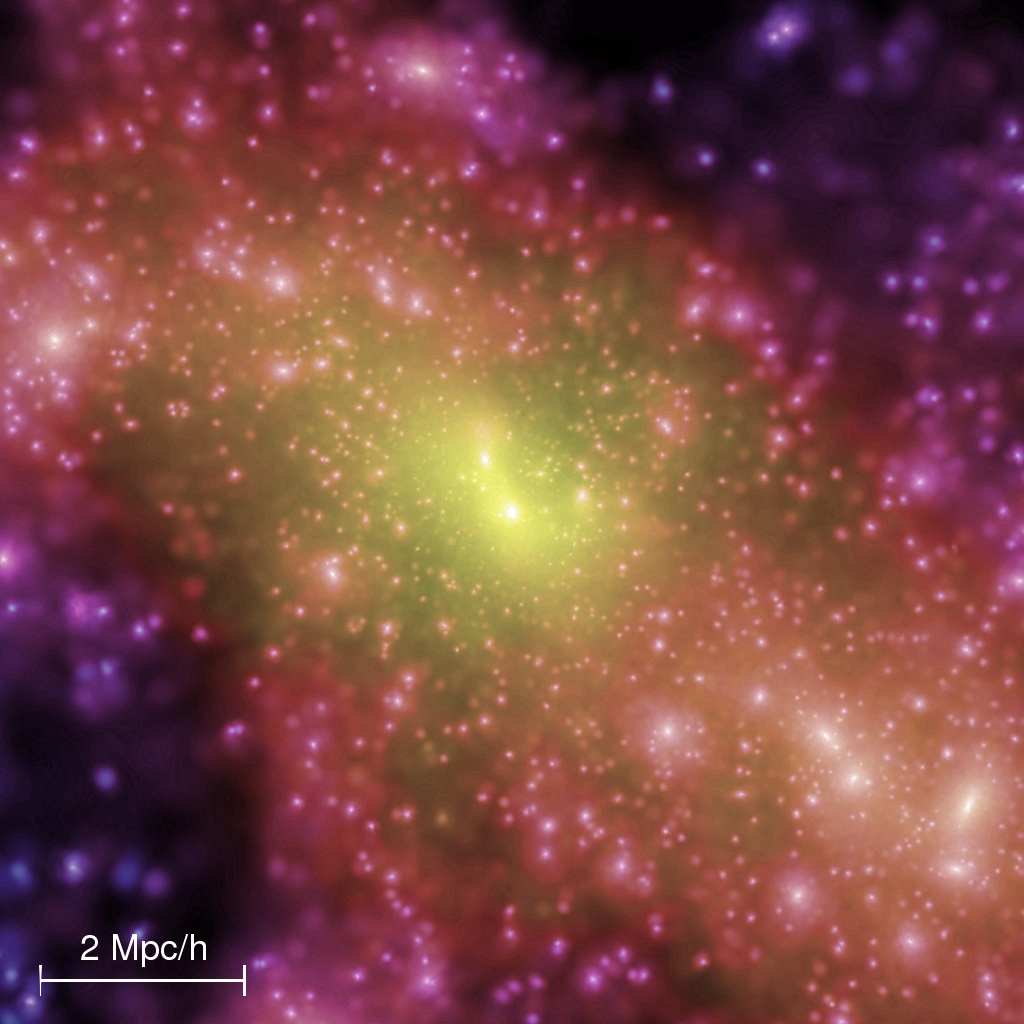
Many simulations of our universe result in a similar discrepancy with current observations. The simulations predict an abundance of subhalos around galaxies the size of our Milky Way which are an order of magnitude higher than observations suggest. This paper tackles the issue of detecting these presumably faint subhalos by analyzing the effects they might have on streams from globular clusters and other satellite galaxies we know to exist.
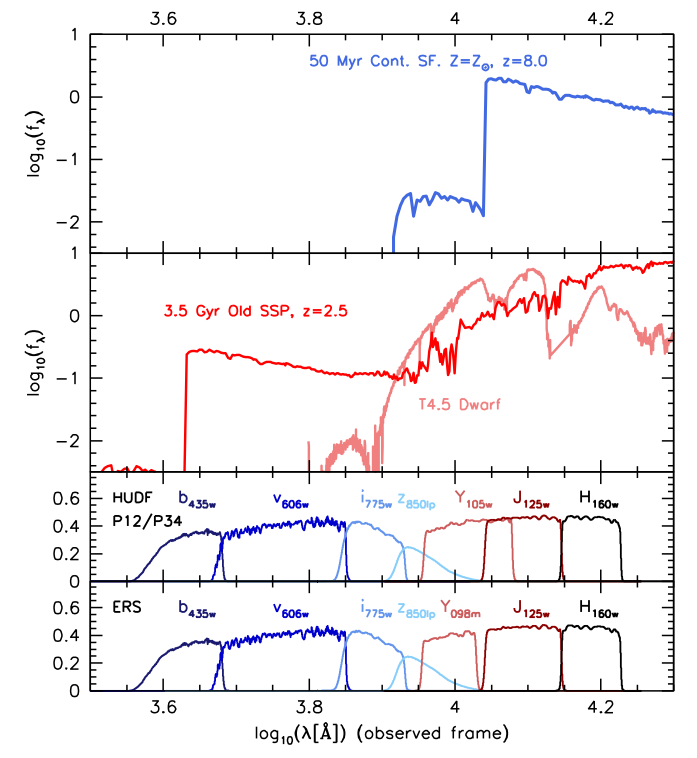
by Dan Gifford | Feb 9, 2011 | Daily Paper Summaries
Neutral hydrogen is very effective at absorbing radiation with wavelengths shorter than 91.2nm. This has become known as the Lyman limit. In this study, the authors use the Lyman-break technique to search for galaxies with z ~ 8 – 9. They use the latest Hubble WFC3 near-infrared data to look for large (Y-J) colors or, “Y-drops”, in a larger field than previous studies due to the camera’s larger field and better infrared sensitivity.
