by Steph Greis | Jan 22, 2016 | Daily Paper Summaries
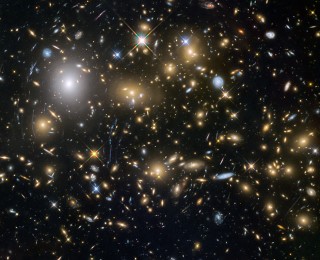
Our current understanding of the Universe suggests that its largest structures, such as clusters and groups of galaxies, would have formed only within the second half of the Universe’s current age. However, today’s paper explores the proposed observational evidence that such structures may actually have began forming a lot earlier than we expected. This poses intriguing questions about the way we model the cosmos, how we interpret our observations, and whether we might need to rethink cosmology.
by Mara Johnson-Groh | Jan 18, 2016 | Daily Paper Summaries
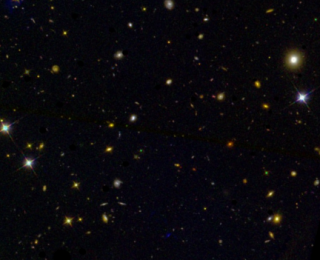
Preliminary results from a new survey looking for ultra-bright galaxies in the early universe.
by Tim Lichtenberg | May 1, 2015 | Daily Paper Summaries
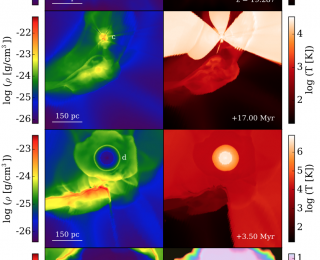
Stars formed in the early Universe were extremely massive and extremely low in elements heavier than helium. The transition from the first to the second generation of stars is still hidden in the shadows of the past. However, simulations of the most massive supernovae can help us to decipher the way of how the life cycle of stars came into being.
by Jesse Feddersen | Apr 6, 2015 | Daily Paper Summaries
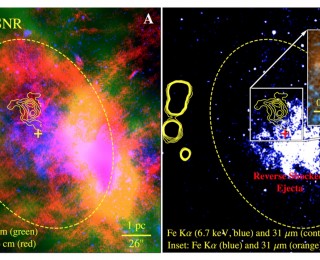
Observations of dust near the remains of a supernova in the center of our galaxy could have implications for dust production in the earliest galaxies.
by Anson Lam | Mar 3, 2015 | Daily Paper Summaries
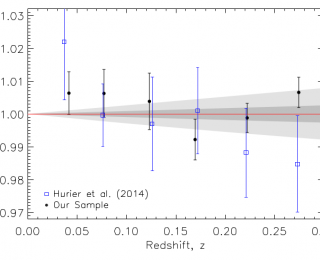
How can we measure the temperature of the Universe across cosmic epochs? Recent data from Planck suggests that the Universe’s cooling history is consistent with the Big Bang model.
by Elisa Chisari | Apr 9, 2014 | Daily Paper Summaries
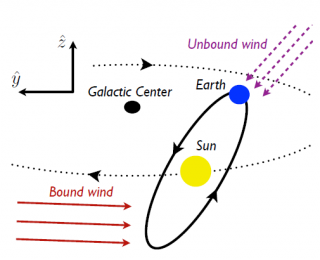
Much like the Cosmic Microwave Background, the Cosmic Neutrino Background permeates our Universe and it could take us back to 1 second after the Big Bang. Today, we discuss the effect of the Sun on modulating the expected signal from the neutrino background.
