• RSS
  • Submit a Guest Post
  • Undergraduates: Submit your Research!
  • Suggest a Paper Topic!
astrobites
  • About
    • About Astrobites
    • Meet the Authors
    • Statement of Inclusivity
    • Copyright & Permissions
  • Latest Research
    • Daily Paper Summaries
    • Classics
    • Undergrad Research
    • Physical Review Coverage
  • Beyond astro-ph
    • Beyond astro-ph Library
    • Interviews
    • Career Navigation
    • Personal Experiences
    • Current Events
    • Teaching with Astrobites
  • Guides
    • EM Spectrum
    • Galaxies & AGNs
    • Spectroscopy and Spectral Lines
    • Adaptive Optics
    • Gravitational Waves
    • Transient Astronomy
    • Astrophysical Software
    • Graduate School
    • Writing a personal statement for grad apps
    • First Observing Run
    • …More Guides!
Select Page

For habitability, two stars are not better than one

by Avery Schiff | Apr 25, 2019 | Daily Paper Summaries

Nothing is easy when you have two stars instead of one. Under the right circumstances, it can be especially hard to hold on to your atmosphere.

Forecast calls for clear skies on WASP-96b

by Jamie Wilson | Jan 21, 2019 | Daily Paper Summaries

A cloud-free world offers the clearest view yet of an exoplanet atmosphere.
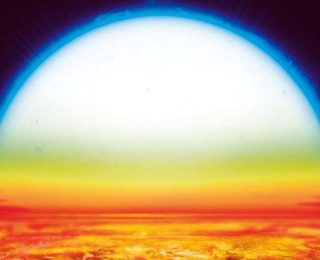
Full Metal Sky

Full Metal Sky

by Vatsal Panwar | Oct 17, 2018 | Daily Paper Summaries

What do the atmospheres of ultra-hot Jupiters and 70s music have in common? A good deal of metal.
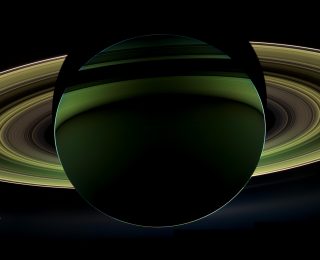
A different kind of planetary ring

A different kind of planetary ring

by Eckhart Spalding | Jul 31, 2018 | Daily Paper Summaries

Higher-order effects are beginning to surface in the photometry of exoplanets. Today we look at the way particles can add a ring to an exoplanet’s silhouette.
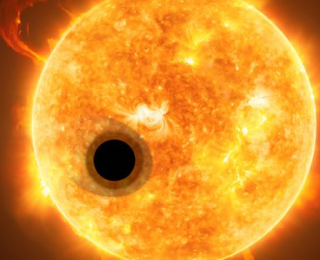
Deflating a Planet: Helium Loss in the Atmosphere of Wasp-107b

Deflating a Planet: Helium Loss in the Atmosphere of Wasp-107b

by Jessica Roberts | Jun 14, 2018 | Daily Paper Summaries

It has long been theorized that exoplanet atmospheres should be partially composed of helium — now we finally have our first detection in the atmosphere of Wasp-107b. Today’s bite explains how the authors observed helium and discuss what this means for the atmosphere of this planet.
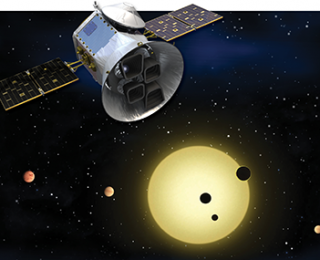
Choosing targets with TESS

Choosing targets with TESS

by Peter Sinclair | May 17, 2018 | Daily Paper Summaries

With the launch of TESS, we will soon have many more exoplanet candidates. But how do we determine which are the most valuable for follow-up observations?

« Older Entries
Next Entries »

Loading

Follow our socials

  • Bluesky
  • Facebook
  • Instagram
  • RSS Feed

More Posts About

AAS AGN astronomy astrophysics binary stars black holes cosmology dark matter dwarf galaxies exoplanets galaxies galaxy evolution gravitational waves habitability JWST Kepler Milky Way observations planetary science planet formation protoplanetary disks radio astronomy simulations solar system spectroscopy star formation stars stellar evolution supernovae theory

Posts by Category

  • Accessibility
  • Applications
  • Beyond
  • Book Reviews
  • Career Navigation
  • Classics
  • Climate Change
  • Course Assignments
  • Crossposts
  • Current Events
  • Daily Paper Summaries
  • Game Reviews
  • Guides
  • Historical Astronomy
  • Instrumentation
  • Interviews
  • Outreach
  • Personal Experiences
  • PRJ
  • Quick Notes
  • Satellites
  • Teaching
  • Undergraduate Research

More Astronomy

  • AAS
  • AAS Nova
  • astro-ph
  • AstroBetter
  • APOD

Read Astrobites in Other Languages

  • Astrobitos (Spanish)
  • Astropontos (Portuguese)
  • staryab (Farsi)

Listen to Astrobites

  • astro[sound]bites

Discover More Incredible Science

  • ScienceBites Network
  • RSS

© 2026 Astrobites | All Rights Reserved | Supported by AAS | Designed by Elegant Themes | Powered by WordPress