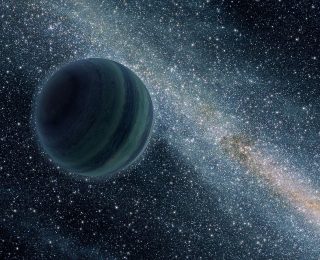
by David Wilson | Sep 21, 2016 | Daily Paper Summaries
The bending of light by gravity produces many phenomena, which can be exploited to make otherwise impossible observations. Chief among these is microlensing, where the light from a distant star or galaxy can be magnified by another object in between it and the observer. Initially used to image distant galaxy clusters, it can also reveal the presence of otherwise undetectable planets.es
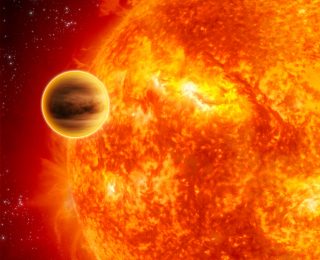
by Gudmundur Stefansson | Sep 20, 2016 | Daily Paper Summaries
On KELT-16b you would melt. I would melt too. A look at an exciting and newly discovered Hot Jupiter, and why KELT-16b is a valuable addition to the group of boiling gas giant planets, and a fantastic target for future atmospheric studies.
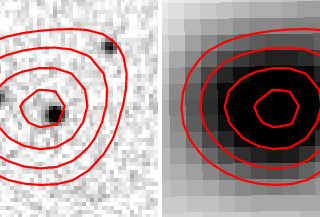
by David Wilson | Aug 30, 2016 | Daily Paper Summaries
How do planets meet their ends? For many of the smallest worlds, it maybe as a debris disc strewn around the tiny white dwarf that is all that is left of their stars. The faint infrared glow from nearly forty such discs have been discovered, their rocky origins given away by the chemical composition of the material falling onto the parent white dwarf. Today’s paper adds another disc to the sample, although not without difficulty.
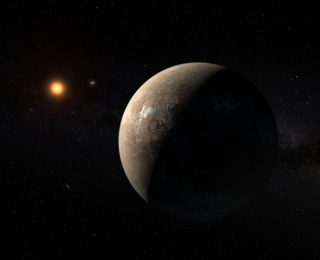
by Joseph Schmitt | Aug 26, 2016 | Daily Paper Summaries
Say hello to your new neighbor. Proxima Centauri, the closest star to the Sun, has an Earth-mass planet in the habitable zone, but it wasn’t easy to find, and it’s in a bit of a dangerous place.
by David Wilson | May 26, 2016 | Daily Paper Summaries
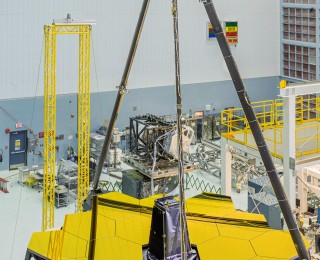
The James Webb Space Telescope will be the largest space observatory built to date. The authors of today’s paper suggest one possible use for the giant new telescope: Searching for signs of life on other planets.
by Suk Sien Tie | Apr 25, 2016 | Daily Paper Summaries
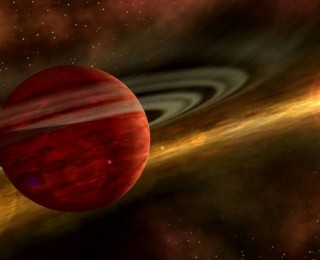
Orbital stability of high-mass multi-planet systems is scrutinized in comparison to their low-mass counterparts.
