by Natasha Batalha | Apr 22, 2016 | Daily Paper Summaries
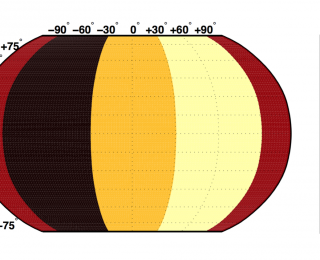
It’s our innate human instinct to uncover mysteries. Find out how Spitzer observations of 55 Cnc e are raising new questions and creating new mysteries that could be addressed with the next generation of ground and space based missions.
by David Wilson | Apr 14, 2016 | Daily Paper Summaries
White dwarfs, the tiny, burnt out cores that stars like the Sun leave behind when they run out of fuel, are a surprisingly ideal place to look for potentially habitable planets. The authors of today’s paper have checked to see if we haven’t already found one, entirely by accident.
by Zephyr Penoyre | Apr 1, 2016 | Daily Paper Summaries
Using a laser we can carefully edit the telltale signs of the Earth’s presence, hiding ourselves away or announcing our presence to other life in the universe. But doing so may be fraught with unknowable consequences that we can never undo. Maybe it’s best to just stay behind the galactic sofa.
by Ashley Villar | Mar 28, 2016 | Daily Paper Summaries
What did the first planets look like?
by David Wilson | Feb 1, 2016 | Daily Paper Summaries
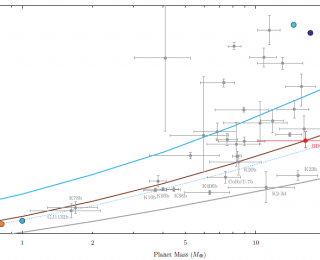
It seems that whenever we have a fact about exoplanets nailed down, an exception will quickly crop up. The authors of today’s paper claim to have spotted a planet over twice the diameter of the Earth, made from solid rock.
by David Wilson | Oct 26, 2015 | Daily Paper Summaries
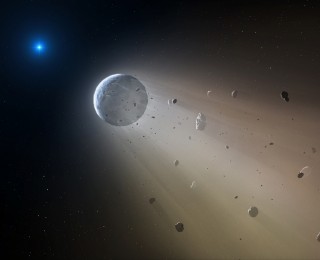
In around five billion years, the hydrogen fuel in the core of the Sun will run out, and our star will begin to die. After swelling up into a red giant, many times bigger than its current size, the Sun will blow away its outer layers to leave a tiny, ultra-dense core, around the size of the Earth. White dwarfs, as these dead, slowly cooling star cores are known, are the ultimate fate for the vast majority of stars in the Universe.
