by David Wilson | Aug 3, 2015 | Daily Paper Summaries
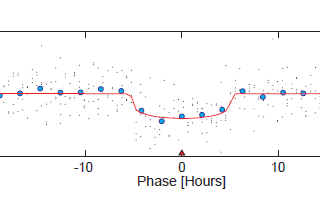
Last month Nasa announced, in what seems like a roughly annual event, the discovery of “Earth 2.0”. Described as a “Bigger, Older Cousin to Earth”, Kepler 452b is the first small planet (defined here as less than twice the radius of the Earth) to be in a roughly one year orbit around a Sun-like star.
But is it otherwise that similar to the Earth? Is it potentially habitable? To try and answer that, let’s look at the discovery paper.
by David Wilson | May 12, 2015 | Daily Paper Summaries
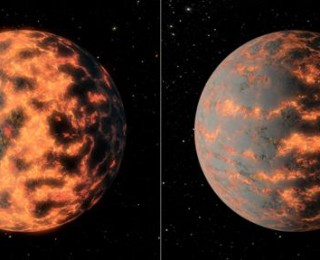
Of the more than 1500 exoplanets discovered over the past two decades, perhaps the most intriguing and unexpected have been the ultra-short period planets, worlds so close to their parent star that they complete an entire orbit in less than a day. Most are small, less than twice the radius of the Earth, and are so hot that their rocky crusts are being melted away. The debris could be used to investigate the composition of these mysterious worlds, but most of them are too small for our current instruments to observe in detail.
by Jaime Green | Mar 4, 2015 | Daily Paper Summaries
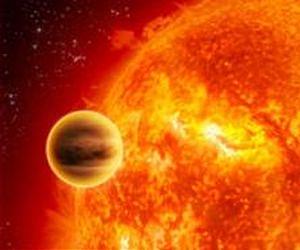
Hot Jupiters are weird and lonely. Is gravitational perturbation to blame?
by Natasha Batalha | Jan 21, 2015 | Career Navigation
Calling undergrads, graduate students and early career scientists interested in exoplanet studies and/or astrobiology to apply for the Emerging Researchers in Exoplanet Science Symposium and/or the Astrobiology Graduate Conference.
by Meredith Rawls | Jun 4, 2014 | Daily Paper Summaries
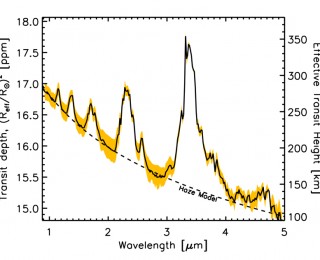
This paper uses Cassini’s infrared eyes to watch the Sun appear to pass behind Titan and light up its atmosphere. From these observations, the authors model different components of the thick atmosphere, and gain new insights about how exoplanets with similar hazy atmospheres might look.
by Astrobites | Mar 8, 2014 | Undergraduate Research
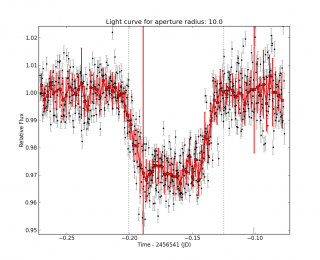
This month’s undergraduate research post features an analysis of distance-indicating RR Lyrae stars, and transiting exoplanet science using a code called OSCAAR.
