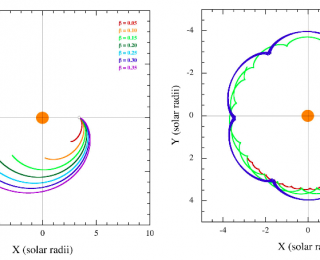
Planet or comet?
KOI 2700b is a planet with an identity crisis: it thinks it is a comet.

KOI 2700b is a planet with an identity crisis: it thinks it is a comet.
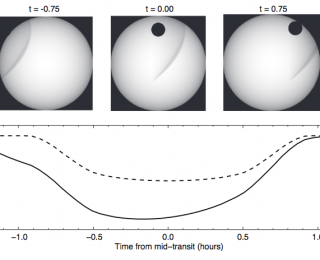
Transit observations can yield a lot of information about exoplanets. If a transiting exoplanet encounters stellar wind, the bow shock created can show up in the transit light curves. In this paper, the authors investigate how the stellar wind of a star can shape the light curves we observe.
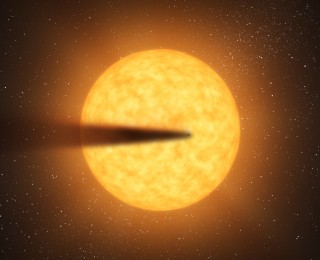
There is a small planet candidate, likely rocky, that looks like it’s being vaporized. The authors of this paper show evidence that this evaporation might be related to stellar activity, not just the planet’s proximity to its star.
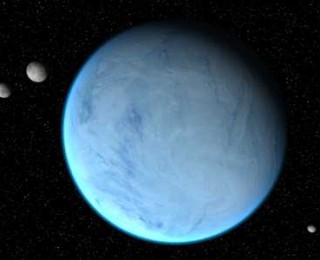
This article uses theoretical modeling to estimate the influence of ice and snow on the habitability of extrasolar planets. This work differentiates itself from past efforts by including the influence of the atmosphere, and by considering planets orbiting M-dwarfs in addition to Sun-like stars.
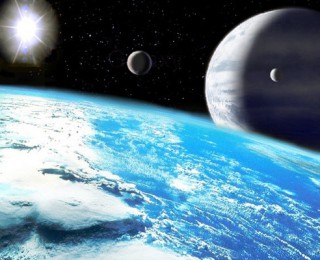
This paper reports that the M-dwarf star GJ667C is orbited by a system of six, maybe seven super-Earths, of which three are in the habitable zone. This is an extraordinarily closely packed system of planets, straight from science fiction!
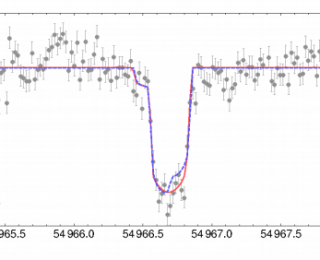
The Hunt for Exomoons with Kepler project has conducted the first ever search for a moon around a planet in the habitable zone. While they find no evidence for such a moon, they demonstrate that Earth-sized and possibly habitable moons should be easily detectable with the current Kepler data.