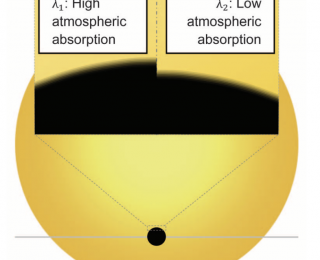
Blurred Lines: degeneracies in modeling exoplanet atmospheres
Scrutinizing a popular method of characterizing exoplanet atmospheres reveals an inherent degeneracy that may only be overcome in special cases.

Scrutinizing a popular method of characterizing exoplanet atmospheres reveals an inherent degeneracy that may only be overcome in special cases.
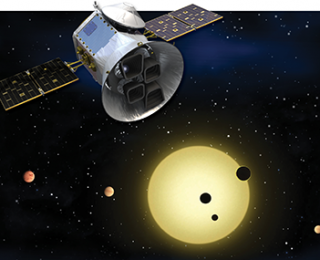
With the launch of TESS, we will soon have many more exoplanet candidates. But how do we determine which are the most valuable for follow-up observations?
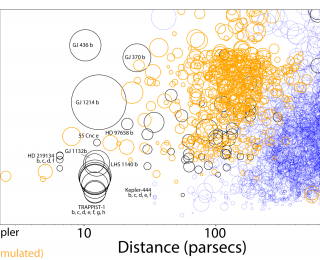
NASA’s TESS spacecraft has launched! Today’s paper predicts how many exoplanets it will find.
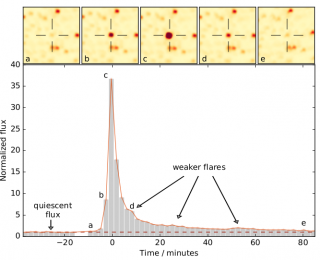
The Sun’s closest neighbor star Proxima Centauri—normally invisible to the naked eye—may have briefly become visible by increasing in brightness over 100 times for a few minutes back in 2016 in the largest flare ever seen from it.
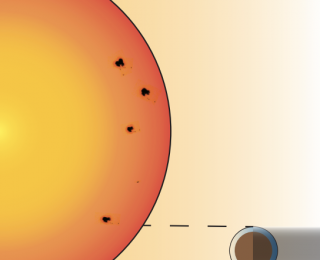
If we don’t understand starspots, we won’t understand exoplanet atmospheres.
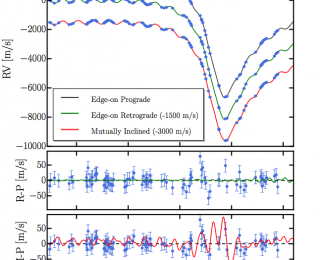
The circumprimary planet HD 59686 raises many questions about formation and stability in binary systems.