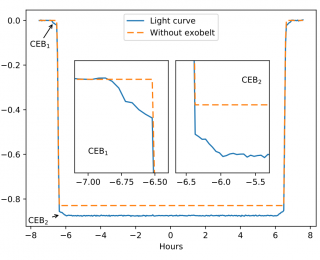
Can we detect alien civilizations from their space junk?
Looking for satellites orbiting exoplanets may allow us to find civilizations with technology similar to our own. And doing so could be possible with our current observational capabilities.

Looking for satellites orbiting exoplanets may allow us to find civilizations with technology similar to our own. And doing so could be possible with our current observational capabilities.

The new high-resolution, hydra-headed PEPSI spectrograph is now in operation. One of the first targets it investigated is an ancient, planet-hosting star.

Tabetha Boyajian calls it “the most mysterious star in the universe.” Has she figured it out?
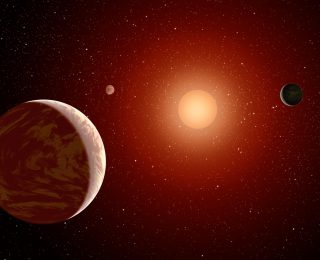
Is it an exoplanet… or is it stellar activity in disguise? In today’s astrobite, we explore the stellar activity for a survey of M-Dwarfs, to help us distinguish signals of M-Dwarf stellar activity from the signals of the exoplanets that may be orbiting them.
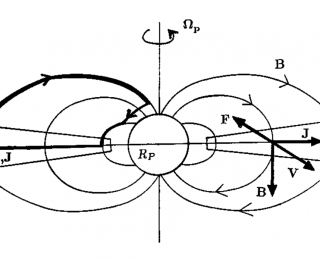
A variety of mechanisms cause stars to experience spin evolution. Can we learn about planet formation by pushing spin measurements down to substellar masses?
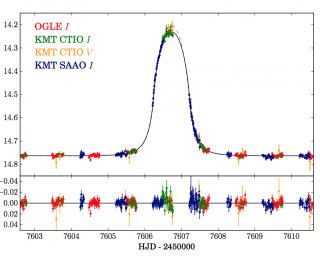
An OGLE microlensing event allowed researchers to find and measure the propeties of a rogue planet.