by Elizabeth Lovegrove | Jan 17, 2012 | Daily Paper Summaries
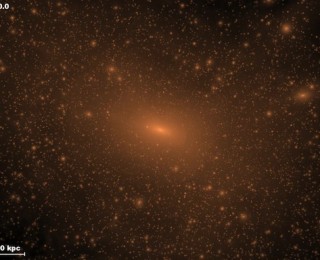
Dark matter is not so dark as the name might imply. Although it so far refuses to interact with normal matter via any force other than gravity, there are secondary signals that we can detect. When we turn our gamma-ray telescopes on regions like the Galactic Center that contain a high density of dark matter, we expect to see a dim, widespread gamma ray haze coming from seemingly empty space, with no baryonic matter source. This paper, due to be published by the Astrophysical Journal, discusses the search for this signature by the collection of satellites that surrounds the Milky Way, and uses the lack of a detection to set an upper limit on the cross-section of the WIMP particle.
by Allison Strom | Dec 16, 2011 | Daily Paper Summaries
Conference proceedings from the 2011 Fermi Symposium highlight some of the major science applications of the gamma-ray space observatory.
by Elizabeth Lovegrove | Sep 5, 2011 | Daily Paper Summaries
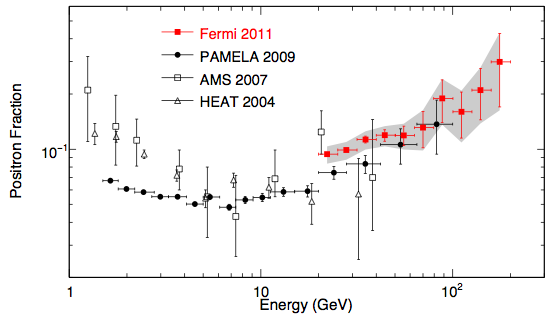
The Fermi Large Area Telescope used a clever method of splitting electrons and positrons via the Earth’s magnetic field to show that there’s a significant excess of cosmic ray positrons at high energies – much more than can be explained using known cosmic ray processes.
by Susanna Kohler | Jun 3, 2011 | Daily Paper Summaries
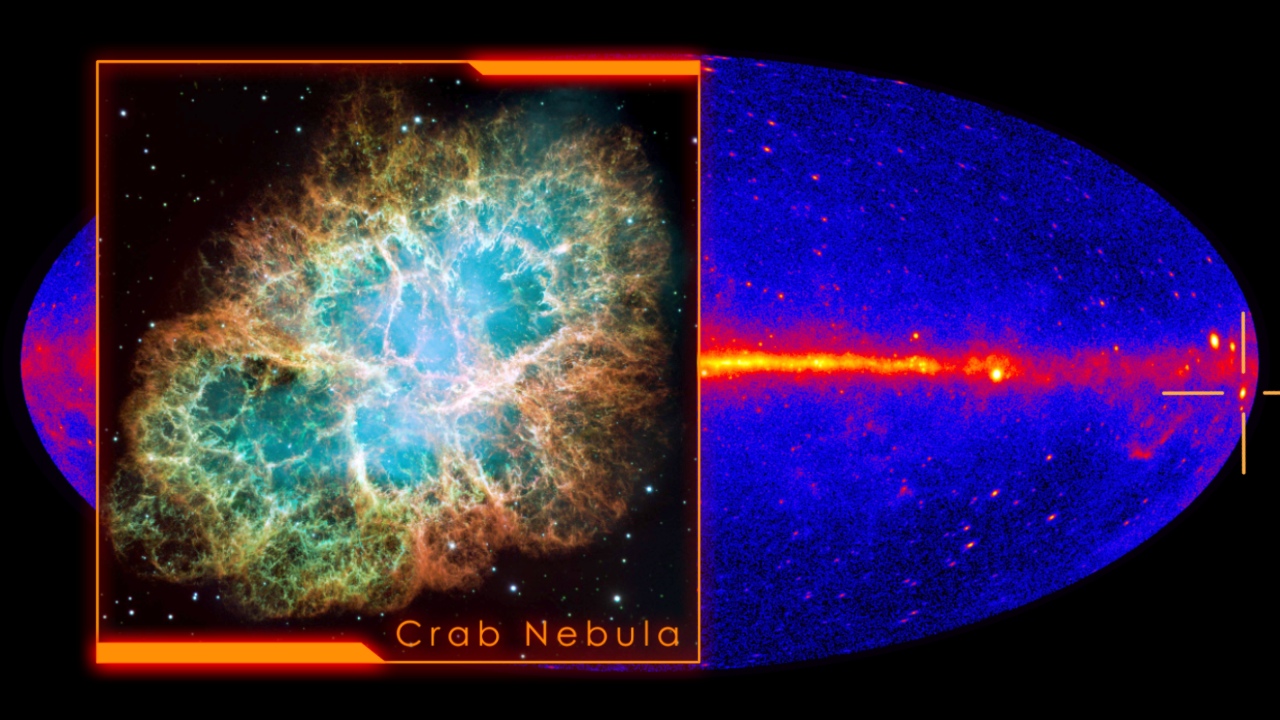
The Crab Nebula has long been used as a standard candle in order to calibrate high-energy instruments … but it turns out it’s had us fooled all along! This paper gives an overview of what we’ve been missing from the Crab Nebula, and what this could mean for our understanding of high-energy astrophysics.
