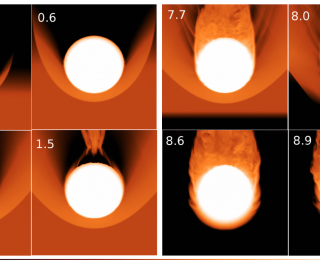
The Case of the Missing Giants
Red giant stars are bright enough to see at the center of our galaxy, but they are missing. A new study puts stars in a wind tunnel to explore a possible way to dim the lights.

Red giant stars are bright enough to see at the center of our galaxy, but they are missing. A new study puts stars in a wind tunnel to explore a possible way to dim the lights.
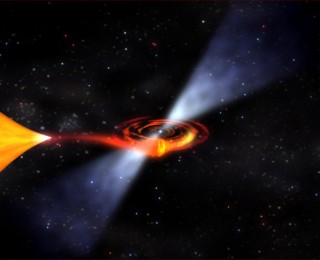
Millisecond pulsars may be responsible for the extra gamma rays near the Galactic Center. Why haven’t we detected more of them?
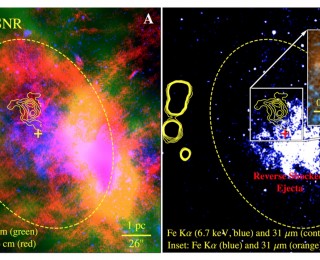
Observations of dust near the remains of a supernova in the center of our galaxy could have implications for dust production in the earliest galaxies.
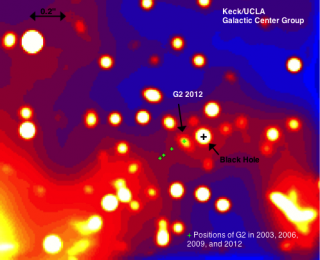
The gas cloud G2 is rapidly approaching the galactic center. Can tidal disruption events with stellar remnants help constrain its orbit?
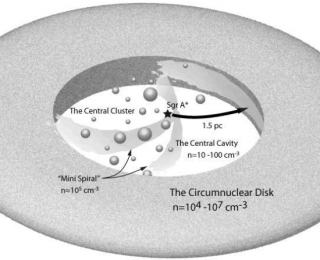
In this article, the authors measure the cosmic ray ionization rate within a few parsecs of the galactic center. They find that the cosmic ray ionization rate is an order of magnitude larger than the galactic standard and also that the molecular gas near the galactic center is much warmer than the typical galactic molecular cloud.
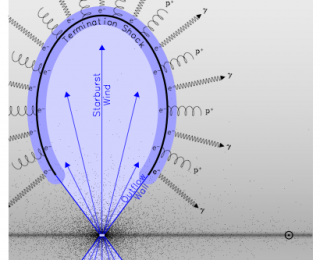
What causes the giant radio and gamma-ray bubbles inflated from our galactic center? This paper provides another good argument for star formation as the culprit.