by Elisabeth Newton | Mar 28, 2012 | Daily Paper Summaries
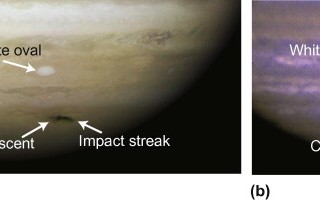
The impact of comet Shoemaker-Levy 9 was a remarkable event: in 1994, a comet, torn into pieces during a close approach with Jupiter two years prior, crashed into Jupiter. It was the first collision between two solar system bodies to ever be observed, and the effects on Jupiter’s atmosphere (see the figure below) were visible for months. At the time, Harrington et al. (2004) predicted that it would be hundreds of years before such an event occurred again. But two and a half years ago, another object collided with Jupiter. No one witnessed the collision, but amateur astronomer A. Wesley noticed a dark streak with properties closely matching those seen after the impact of SL-9. Because of these similarities, it is believed that this feature was the result of an impact.
by Nathan Goldbaum | Jun 11, 2011 | Career Navigation
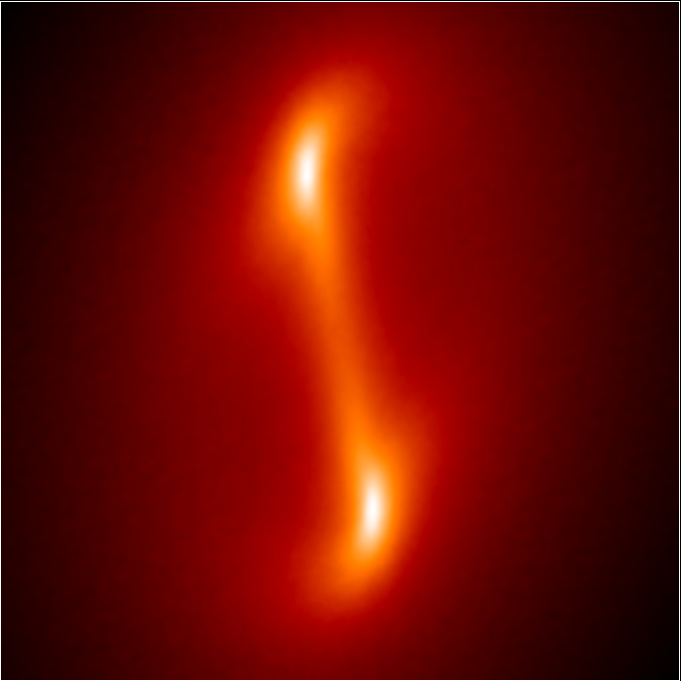
Today’s astrobite will be a sequel to a post I wrote a few months ago on using the smoothed particle hydrodynamics (SPH) code Gadget-2. In the first post, I went over how to install Gadget and showed how to run one of the test cases included in the Gadget distribution. Today, I’d like to show how to set up, run, and analyze a simple hydrodynamics test problem of your own.Perhaps one of the oldest topics in astrophysics is the study of binary stars. In 1767, the British natural philosopher John Michell used an early form of statistical analysis to show that the number of closely separated pairs of stars in the night sky is far higher than what one might expect from a randomly distributed field of stars. How do these binary pairs form? Modern astrophysics offers several answers, and in today’s post, we will focus on one possible mechanism: the direct formation of a binary star pair by the collapse of a rotating isothermal sphere of gas.We will approach this problem using a formulation first proposed by Alan Boss and Peter Bodenheimer in 1979 and later modified by Andreas Burkert and Peter Bodenheimer in 1993. The so-called standard isothermal test case models the gravitational collapse of a one solar mass, spherical, rigidly rotating molecular cloud with a small-amplitude m = 2 density perturbation.If we wish to simulate the collapse, we first need to set up the initial conditions for the simulation. You can obtain initial conditions files from the following url: http://ngoldbaum.net/astrobites/SICtest.tgz. You can also generate your own initial conditions using the supplied codes. To summarize, the initial conditions are...
by Nathan Goldbaum | Apr 2, 2011 | Career Navigation
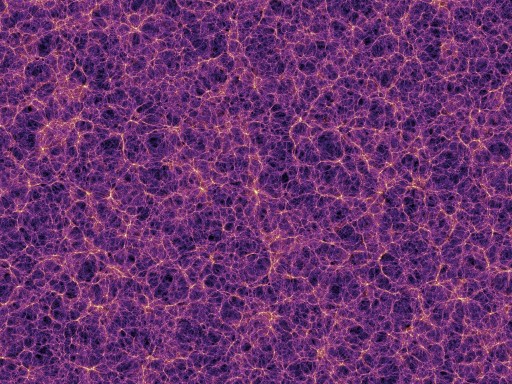
This is the first of two posts detailing how to install and operate the Gadget-2 hydrodynamics code. Click here for the second post in the series.Today’s astrobite will be another in a series on career advice and useful astronomical tools. So far, it looks like there’s been a dearth of posts on the tools of theoretical astrophysics, so I thought I’d take the opporunity to show how easy it is to run a simulation using Gadget-2, a smoothed particle hydrodynamics (or SPH) code. Gadget-2 is open source and publically available, so anyone can run simulations with it. In a future post, I’ll discuss how to set up and run a simple hydrodynamics test problem.The instructions for installing Gadget-2 will be highly platform dependent. If you’re running Linux or UNIX, you have all of the tools you will need to compile the codes already. If you’re on a Mac, you’ll need to install and update Xcode, which includes all of the compilers you will need. On Windows, you’ll probably need to install cygwin which will give your Windows installation full UNIX support. Since I have a Mac, I’m going to focus on getting these codes working on OS X Snow Leopard. If you have a different system, it might not be possible to follow my instructions exactly. I’ll be doing all of the simulations for this series of posts on my laptop, a Macbook Pro.First, you will need to download a few software packages. Gadget 2.0.7. Version 1.9 of the GNU scientific library (GSL). Version 2.1.5 of the FFTW fast Fourier transform library. A Message Passing Interface (MPI) library such...
