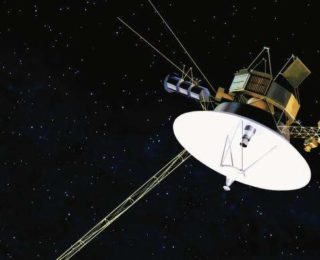
Where the Solar System Ends
Voyager 2 finally crossed the heliopause, the edge of our solar system – so what’s out there?

Voyager 2 finally crossed the heliopause, the edge of our solar system – so what’s out there?
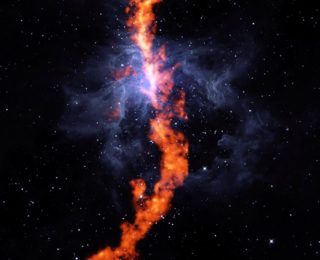
Today’s paper investigates how shocks interact with isothermal, gaseous filaments in the interstellar medium. It reveals that the structure of the resulting wake is dependent on the speed of the shock and orientation, density, and length of the filament.
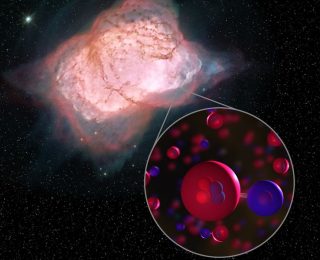
SOFIA observations have detected HeH+ in the planetary nebula NGC 7027, shedding new light on the dawn of chemistry in the universe.
Professor Xander Tielens, a chemical physicist and self-described moon child, studies molecules in the interstellar medium as a tool for understanding everything from galaxy evolution to the origin of life. Learn more at his plenary talk at #AAS234.
Professor Yacine Ali-Haïmoud studies the theory behind our astrophysical observations, from primordial black holes to organic compounds in the interstellar medium. Learn more at his keynote at #AAS234.
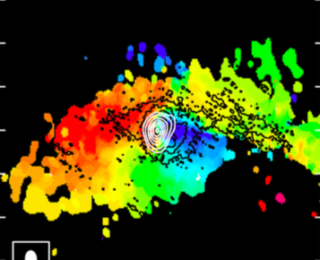
The sites of planet formation seem to be anything but orderly and a recent discovery may help explain the observed wide variety of exoplanet configurations.