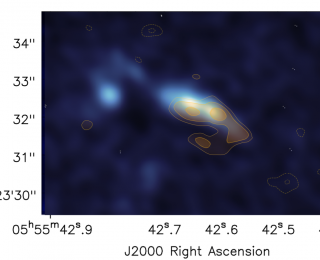
Catching Galactic Recycling In The Act
This little galaxy is churning out the ingredients necessary for planets and life at a frantic pace. New observations reveal the sharpest view yet of this cycle of gas and stardust.

This little galaxy is churning out the ingredients necessary for planets and life at a frantic pace. New observations reveal the sharpest view yet of this cycle of gas and stardust.
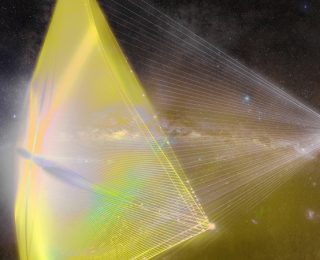
We now know that our nearest stellar neighbor may harbor an Earth-like exoplanet. The Breakthrough Starshot initiative plans to get spacecraft there in only 20 years. However, the “empty” space between us and our nearest star is not completely empty, and the material in the path of these spacecraft may have catastrophic consequences for the mission.
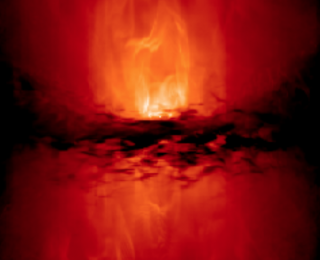
In light of new observations, the traditional dusty-torus picture of active galactic nuclei may need revision.
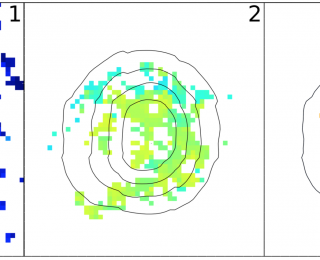
In the Triangulum Galaxy, over the course of a hundred thousand years, three supernova exploded from the same star cluster. The remains of these explosions have expanded into a trio of giant bubbles nested within each other.
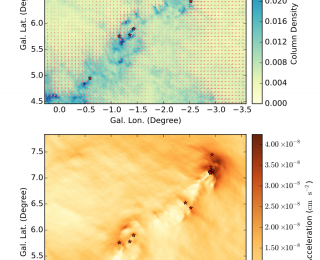
Gravity turns gas into stars. Today’s astrobite introduces a new way to study gravity’s pull in a molecular cloud – the birthplace of new stars.
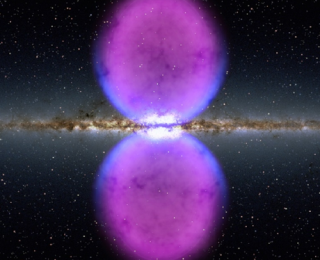
M31 discovered to be blowing vast bubbles of gamma rays, just like our own galaxy.