by Jesse Feddersen | Oct 14, 2015 | Daily Paper Summaries
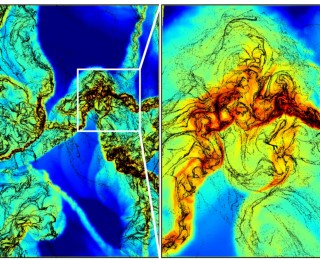
Molecular clouds, where new stars are born, are made of two components: gas and dust. The gas is mostly hydrogen, and the dust is made of elements crucial for forming planets and people, like silicon and carbon. Today’s paper shows that these two components behave very differently in a simulated molecular cloud. This could have exciting consequences for the growth of dust and the formation of stars and planets.
by Sukrit Ranjan | Aug 1, 2013 | Daily Paper Summaries
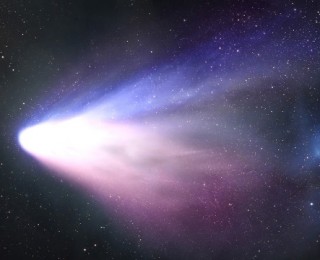
This paper describes the measurement of the deuterium-to-hydrogen (D/H) ratio in a Jupiter-family comet, 45P. This ratio is related to the formation history of the comet and helps inform our understanding of the formation of our solar system.
by Susanna Kohler | May 14, 2012 | Daily Paper Summaries
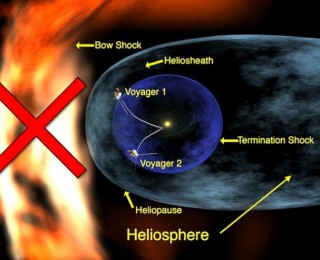
Recent data from IBEX has revealed that our decades-old model of the heliosphere is wrong: there is no bow shock ahead of the heliosphere in the ISM.
by Nathan Goldbaum | Oct 26, 2011 | Daily Paper Summaries
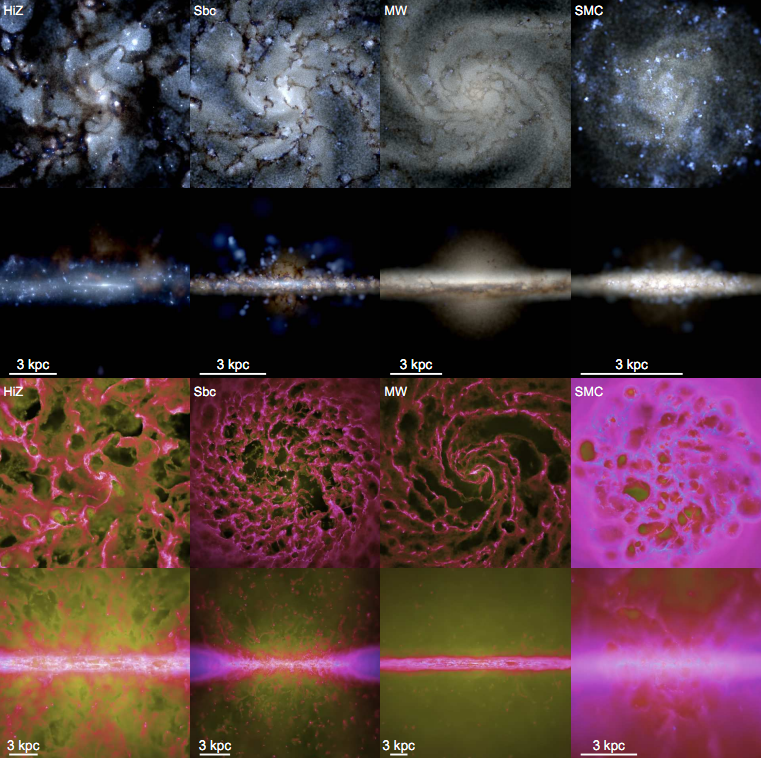
For today’s astrobite, we will be discussing some of the highest-resolution simulations of isolated galaxies performed to date. Not only are these simulations high resolution, but they also include prescriptions to model several physical effects that previous galaxy evolution simulations have mostly ignored.
by Ian Czekala | Feb 23, 2011 | Daily Paper Summaries
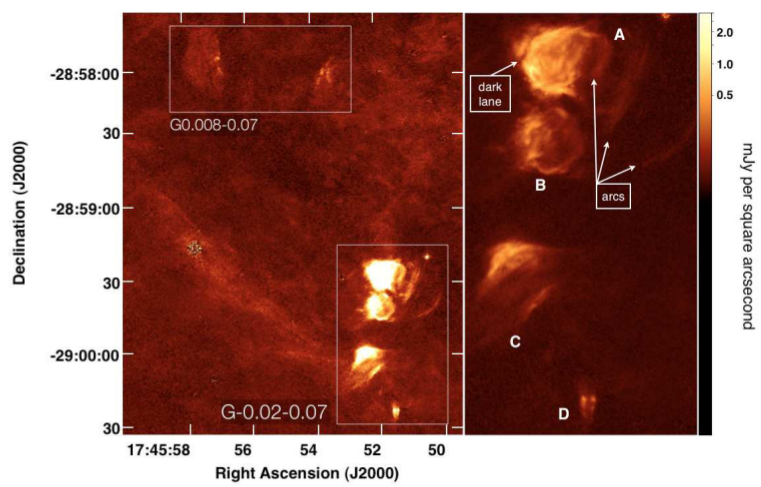
It turns out that there is a lot more to the universe than just stars, planets, and galaxies. Much of the “empty space” between these objects is actually host to interesting astrophysical processes, such as star-formation in molecular clouds. Hot, young stars can emit strong radiation that will ionize the surrounding hydrogen gas. Astronomers call these dense regions of ionized hydrogen HII regions.
by Elisabeth Newton | Feb 13, 2011 | Daily Paper Summaries
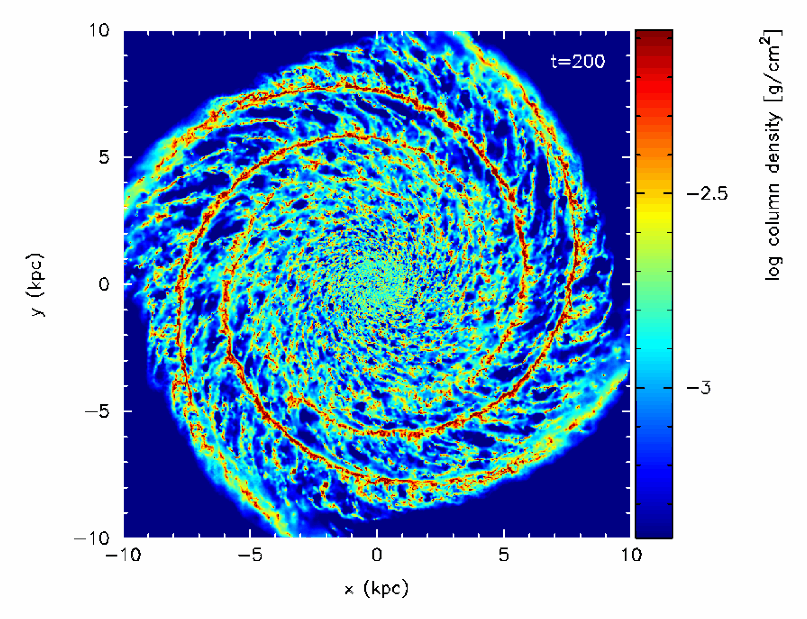
In this paper, Dobbs, Burkert & Pringle suggest that most molecular clouds are not gravitationally bound, as is often assumed. They present simulations in which stellar feedback and collisions between clouds play a prominent role.
