• RSS
  • Submit a Guest Post
  • Undergraduates: Submit your Research!
  • Suggest a Paper Topic!
astrobites
  • About
    • About Astrobites
    • Meet the Authors
    • Statement of Inclusivity
    • Copyright & Permissions
  • Latest Research
    • Daily Paper Summaries
    • Classics
    • Undergrad Research
    • Physical Review Coverage
  • Beyond astro-ph
    • Beyond astro-ph Library
    • Interviews
    • Career Navigation
    • Personal Experiences
    • Current Events
    • Teaching with Astrobites
  • Guides
    • EM Spectrum
    • Galaxies & AGNs
    • Spectroscopy and Spectral Lines
    • Adaptive Optics
    • Gravitational Waves
    • Transient Astronomy
    • Astrophysical Software
    • Graduate School
    • Writing a personal statement for grad apps
    • First Observing Run
    • …More Guides!
Select Page
ISM through the [CII] looking “glass”

ISM through the [CII] looking “glass”

by Guest | Mar 9, 2022 | Daily Paper Summaries

This bite explores a novel framework for simulating the 158 micron [CII] emission from galaxies in EAGLE simulations.

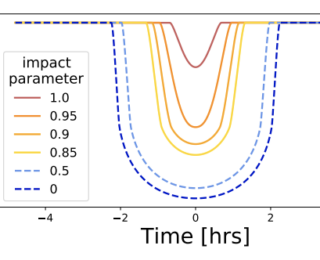
Grab your umbrellas, ’cause it’s raining grazing planets!

Grab your umbrellas, ’cause it’s raining grazing planets!

by Catherine Clark | Feb 21, 2022 | Daily Paper Summaries

Today’s author gets out their umbrella to model planets that graze their stellar hosts.
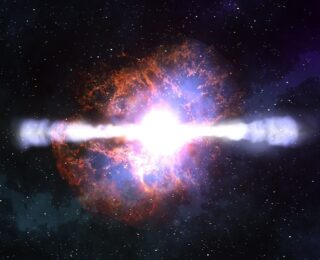
Transient Butterflies: Fast Blue Optical Transients can be powered by Jet-Shocked Cocoons

Transient Butterflies: Fast Blue Optical Transients can be powered by Jet-Shocked Cocoons

by Jason Hinkle | Jan 23, 2022 | Daily Paper Summaries

FBOTs or butterflies? Today’s paper presents a new model to describe the emission from fast blue optical transients.
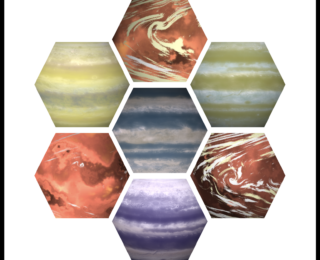
Atmospheres of Small Planets Through a Big Telescope

Atmospheres of Small Planets Through a Big Telescope

by Luna Zagorac | Dec 22, 2021 | Daily Paper Summaries

Astronomers around the world are excited about the launch of a new telescope! In today’s bite, read about what that might bring for detections of biosignatures in the atmospheres of exoplanets.
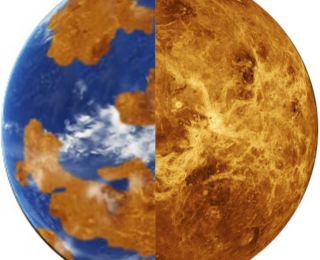
Hydrate or Die-drate: Was Venus Ever Habitable?

Hydrate or Die-drate: Was Venus Ever Habitable?

by Katya Gozman | Nov 10, 2021 | Daily Paper Summaries

Could Venus have ever boasted the expansive oceans we find on Earth today? Find out by reading today’s bite about planetary scientists that modeled Venus’s atmosphere!

Water on Mars? Hold up.

Water on Mars? Hold up.

by Anthony Maue | Aug 14, 2021 | Daily Paper Summaries

Anomalous radar reflections, thought to be evidence of liquid water under the ice on Mars, may instead be explained by multiple layers of even more ice.

« Older Entries
Next Entries »

Loading

Follow our socials

  • Bluesky
  • Facebook
  • Instagram
  • RSS Feed

More Posts About

AAS AGN astronomy astrophysics binary stars black holes cosmology dark matter dwarf galaxies exoplanets galaxies galaxy evolution gravitational waves habitability JWST Kepler Milky Way observations planetary science planet formation protoplanetary disks radio astronomy simulations solar system spectroscopy star formation stars stellar evolution supernovae theory

Posts by Category

  • Accessibility
  • Applications
  • Beyond
  • Book Reviews
  • Career Navigation
  • Classics
  • Climate Change
  • Course Assignments
  • Crossposts
  • Current Events
  • Daily Paper Summaries
  • Game Reviews
  • Guides
  • Historical Astronomy
  • Instrumentation
  • Interviews
  • Outreach
  • Personal Experiences
  • PRJ
  • Quick Notes
  • Satellites
  • Teaching
  • Undergraduate Research

More Astronomy

  • AAS
  • AAS Nova
  • astro-ph
  • AstroBetter
  • APOD

Read Astrobites in Other Languages

  • Astrobitos (Spanish)
  • Astropontos (Portuguese)
  • staryab (Farsi)

Listen to Astrobites

  • astro[sound]bites

Discover More Incredible Science

  • ScienceBites Network
  • RSS

© 2026 Astrobites | All Rights Reserved | Supported by AAS | Designed by Elegant Themes | Powered by WordPress