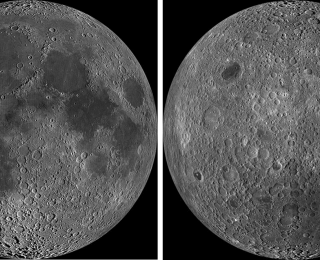
A Lunar Mystery Solved, with the Earth as the Culprit
Heat from the proto-Earth may have caused the difference in the Moon’s far- and near-side crust thicknesses.

Heat from the proto-Earth may have caused the difference in the Moon’s far- and near-side crust thicknesses.
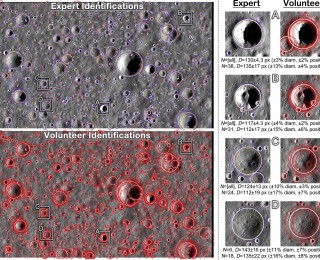
How good are citizen-scientists at characterizing crater densities and size distributions on the lunar surface? For that matter how good are the experts? Today’s study attempts to answer these questions by having a group of experts analyze images of the Moon from the Lunar Reconnaissance Orbiter Camera.
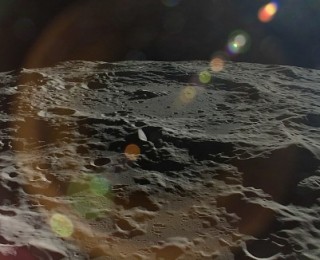
I’m going to go ahead and give away the punchline: the answer to this post’s title is, “If your source is within 8 degrees of the Moon, quite probably.” — at least according to this paper’s authors. Read on to find out why!
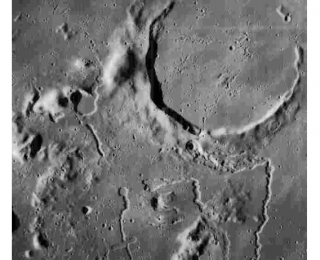
A brief history of scientists’ views on water and the Moon.
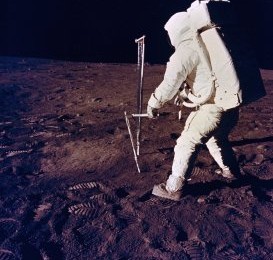
Are robotic missions really more efficient than human space exploration? Ian Crawford explains why planetary astronomers should support human space exploration.
The moon is usually pictured in illustrations of Christmastime which show evening or night scenes. But, as Peter Barthel reveals in his study, illustrations of the partially lit moon are often astronomically incorrect, unless the scenes take place Down Under.