by Elizabeth Lovegrove | Jun 8, 2012 | Current Events
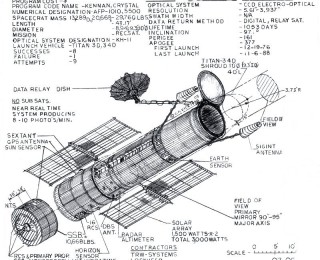
Today the National Reconnaissance Office (NRO) announced that it has given NASA not one but two fully-constructed space telescopes, roughly equivalent to Hubble with a wider field of view. The telescopes, which were offered to NASA about a year ago (a team of scientists has been considering whether to accept them in the meantime), come with all their hardware minus instruments – a total value to the agency of hundreds of millions of dollars plus years of lead time.
by Lauren Weiss | Apr 5, 2012 | Current Events, Quick Notes
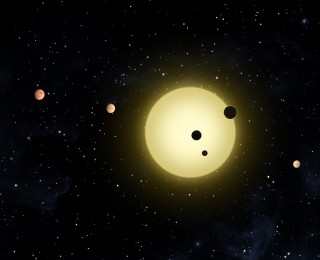
Kepler mission extended to 2016.
by Courtney Dressing | Mar 29, 2012 | Daily Paper Summaries
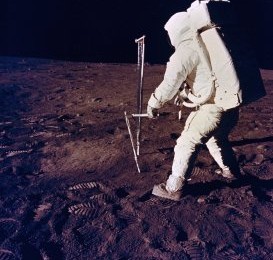
Are robotic missions really more efficient than human space exploration? Ian Crawford explains why planetary astronomers should support human space exploration.
by Kim Phifer | Mar 19, 2012 | Current Events, Guides
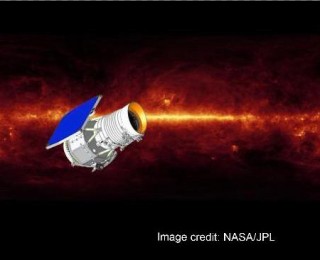
The Wide-field Infrared Survey Explorer (WISE) data release promises many new and exciting discoveries!

by Kirit Karkare | Feb 28, 2012 | Daily Paper Summaries
A new infrared camera is now flying 41,000 feet above the Earth’s surface!
by Lauren Weiss | Feb 10, 2012 | Quick Notes
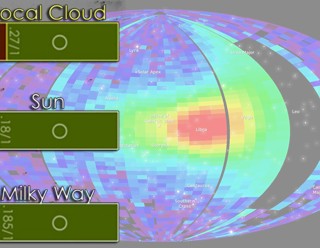
One of the most important elements for complex life on Earth is oxygen. In a recent publicity video, NASA explained how its IBEX Mission found that the solar system is oxygen-rich compared to its surroundings. The original press release is here, and the results were published in a series of six articles in the Astrophysical Journal – you (or your institution) need a subscription to see the ApJ article.The IBEX Mission measured the ratio of neon to oxygen in neutral atoms that slipped through our Solar System’s protective heliosphere (neutral particles are not affected by its magnetic field, so they pass right through) and determined that there is more oxygen for each neon atom inside our Solar System than outside. The Mission scientists posit two theories to explain the relative over-abundance of oxygen in our solar system: (1) the sun originally formed in a part of the galaxy with an oxygen abundance different from that of our current location, or (2) much of the oxygen of the interstellar medium (the space between stars) is trapped in grains of ice and dust, and was thus not detected by the IBEX Mission. Either explanation could have important implications for astrobiology, and for understanding the formation of our solar system and...
