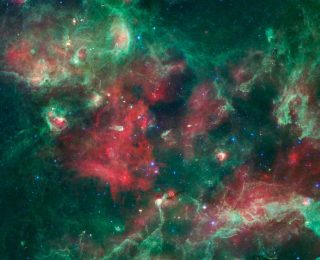
Can we see neutrinos from the star-forming region Cygnus?
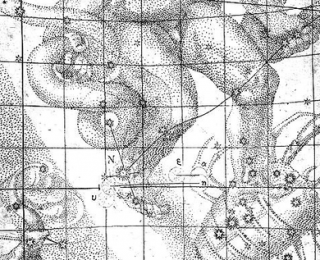
Today’s bite discusses neutrinos from a particularly interesting region of the sky: the Cygnus X region.

Today’s bite discusses neutrinos from a particularly interesting region of the sky: the Cygnus X region.
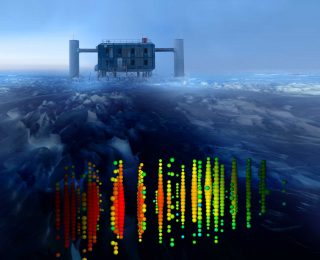
The observed spectra of astrophysical neutrinos and gamma rays do not match up using current models. Today’s paper may have solved this quandary.
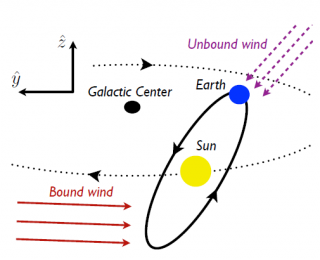
Much like the Cosmic Microwave Background, the Cosmic Neutrino Background permeates our Universe and it could take us back to 1 second after the Big Bang. Today, we discuss the effect of the Sun on modulating the expected signal from the neutrino background.
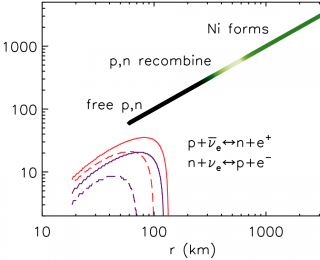
There aren’t many places in the universe that you can find a bunch of free neutrons not already trapped inside a nucleus—except in neutron stars. Luckily, neutron stars in violent mergers with other neutron stars, or with black holes, tend to disperse a little bit of their matter into the interstellar medium. Tidal forces eject some matter as the two objects swing around each other in their final orbits. Then, if an accretion disk forms, winds blown off the surface of the disk disperse even more matter. Surman and her colleagues look at the nucleosynthesis that occurs in this latter process, and find something surprising.
Supernovae happen in the Milky Way at a rate of two or three per century. But, will we be able to see it when it happens next, or will dusty galactic center prevent us from studying it?
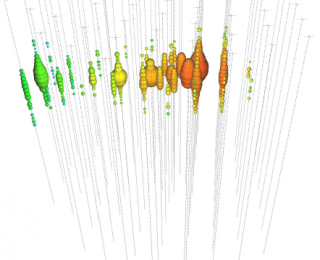
The IceCube project at the South Pole makes the first detection of high-energy extraterrestrial neutrinos.