• RSS
  • Submit a Guest Post
  • Undergraduates: Submit your Research!
  • Suggest a Paper Topic!
astrobites
  • About
    • About Astrobites
    • Meet the Authors
    • Statement of Inclusivity
    • Copyright & Permissions
  • Latest Research
    • Daily Paper Summaries
    • Classics
    • Undergrad Research
    • Physical Review Coverage
  • Beyond astro-ph
    • Beyond astro-ph Library
    • Interviews
    • Career Navigation
    • Personal Experiences
    • Current Events
    • Teaching with Astrobites
  • Guides
    • EM Spectrum
    • Galaxies & AGNs
    • Spectroscopy and Spectral Lines
    • Adaptive Optics
    • Gravitational Waves
    • Transient Astronomy
    • Astrophysical Software
    • Graduate School
    • Writing a personal statement for grad apps
    • First Observing Run
    • …More Guides!
Select Page
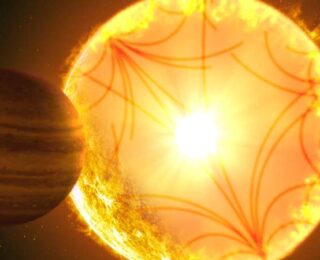
Honey, I shrunk the orbit!

Honey, I shrunk the orbit!

by Maryum Sayeed | Dec 28, 2022 | Daily Paper Summaries

Today’s post describes the discovery of Kepler’s first planet candidate spiraling into its star!

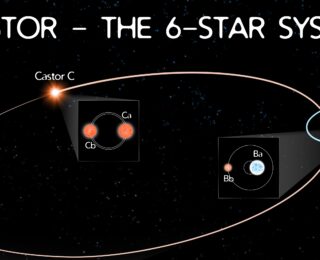
Dancing with the (Six) Stars, or, a 200 year story of the Castor system

Dancing with the (Six) Stars, or, a 200 year story of the Castor system

by William Balmer | Nov 7, 2022 | Daily Paper Summaries

Astronomers study the orbits of a sextuplet system, an absurdly complex arrangement of six stars in orbit around one another, in order to measure their masses once and for all.
Learning more about exoplanet orbits using orbitize!

Learning more about exoplanet orbits using orbitize!

by Clarissa Do O | Sep 16, 2022 | Guides

Want to learn how astronomers discover and understand exoplanet orbits? Today’s post will teach how to use the open source code called orbitize! in Python!
Fly-bye, Baby: a review of the impact of stellar flybys on protoplanetary disks

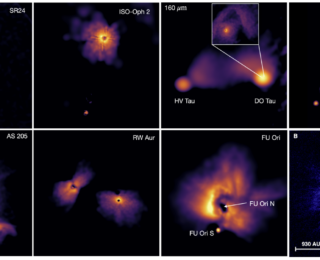
Fly-bye, Baby: a review of the impact of stellar flybys on protoplanetary disks

by William Balmer | Aug 23, 2022 | Daily Paper Summaries

Protoplanetary disks don’t exist in isolation; when young stars pass each other by, their gravitational encounter can disrupt, or maybe even kickstart, planet formation.
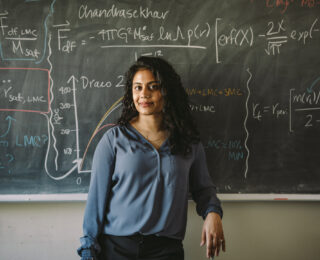
Women’s History Month: Dr. Ekta Patel

Women’s History Month: Dr. Ekta Patel

by Sahil Hegde | May 1, 2022 | Interviews, Personal Experiences

In today’s post, we interview Dr. Ekta Patel, a Miller postdoctoral fellow at UC Berkeley, about her astronomy journey.
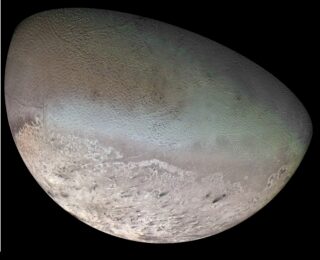
Tick, tick, plume! Explaining eruptions on Neptune’s largest moon

Tick, tick, plume! Explaining eruptions on Neptune’s largest moon

by Anthony Maue | Dec 17, 2021 | Daily Paper Summaries

Voyager 2 observed unusual dark plumes on the icy moon Triton. Read on to learn what may cause this mysterious process.

« Older Entries
Next Entries »

Loading

Follow our socials

  • Bluesky
  • Facebook
  • Instagram
  • RSS Feed

More Posts About

AAS AGN astronomy astrophysics binary stars black holes cosmology dark matter dwarf galaxies exoplanets galaxies galaxy evolution gravitational waves habitability JWST Kepler Milky Way observations planetary science planet formation protoplanetary disks radio astronomy simulations solar system spectroscopy star formation stars stellar evolution supernovae theory

Posts by Category

  • Accessibility
  • Applications
  • Beyond
  • Book Reviews
  • Career Navigation
  • Classics
  • Climate Change
  • Course Assignments
  • Crossposts
  • Current Events
  • Daily Paper Summaries
  • Game Reviews
  • Guides
  • Historical Astronomy
  • Instrumentation
  • Interviews
  • Outreach
  • Personal Experiences
  • PRJ
  • Quick Notes
  • Satellites
  • Teaching
  • Undergraduate Research

More Astronomy

  • AAS
  • AAS Nova
  • astro-ph
  • AstroBetter
  • APOD

Read Astrobites in Other Languages

  • Astrobitos (Spanish)
  • Astropontos (Portuguese)
  • staryab (Farsi)

Listen to Astrobites

  • astro[sound]bites

Discover More Incredible Science

  • ScienceBites Network
  • RSS

© 2026 Astrobites | All Rights Reserved | Supported by AAS | Designed by Elegant Themes | Powered by WordPress